

Identium provides RFID systems for manufacturing and work-in-progress (WIP) tracking — giving production teams real-time visibility of every job, bin and assembly on the shop floor without manual data entry. RFID in manufacturing replaces clipboard rounds and line-side barcode scans with reads that happen automatically as work moves.
How RFID WIP tracking works
Tag the carrier — the bin, tote, pallet, fixture or the job traveller itself — with an industrial UHF tag. Fixed readers at each process stage record arrivals and departures automatically, so your ERP or MES always knows where each work order is, how long it has waited and which route it took. Handheld readers cover searches, audits and exception handling.
Where RFID fits in manufacturing
- Live WIP status by stage, line and order — no clipboard rounds or barcode scanning
- Cycle-time and bottleneck data — accurate timings for every routing, straight from the floor
- Batch integrity — fewer lost or misrouted batches, with a genealogy trail for quality audits
- Finished-goods reconciliation — automatic booking into stores; see RFID inventory management
- Tools, dies and fixtures — check-out/check-in discipline for the equipment that keeps lines running
- Dispatch verification — gate reads confirm the right goods leave on the right vehicle
High-temperature, metal-mount and chemical-resistant tags are available for harsh processes — see rugged RFID tags and RFID metal tags. Typical deployments include automotive and tyre manufacturing lines.
Recommended Identium hardware
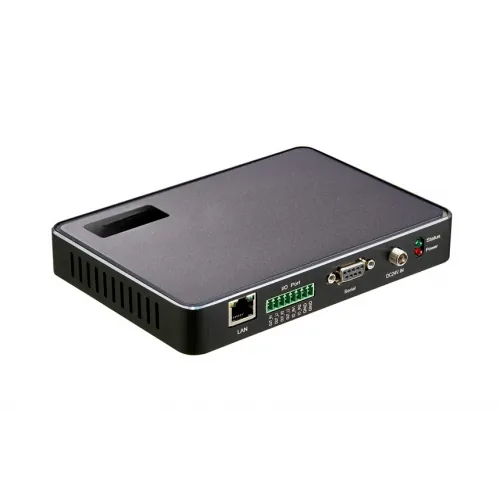
- IHZ4 4-port fixed reader — one line-side reader driving up to four antennas at consecutive stages.
- UHF gate reader HLR200 — portal reading between shops and at finished-goods dispatch.
- CX1500N handheld RFID reader — Android handheld for WIP searches, audits and exceptions.
- CR400 ceramic on-metal tag — survives heat and harsh treatment on metal fixtures and tooling.
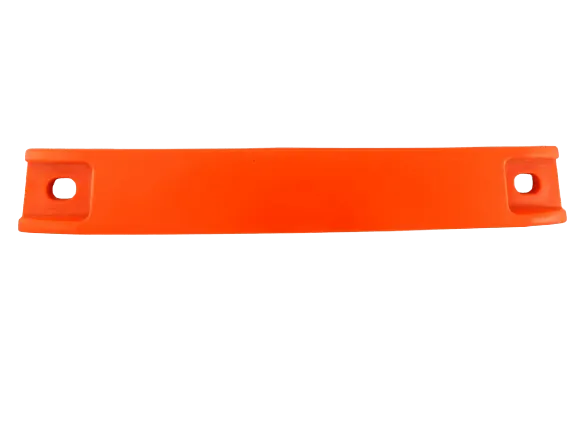
- RFID metal tags — metal-mount options for bins, trolleys and machine parts.
Related solutions
- RFID tool tracking
- RFID asset tracking
- RFID equipment maintenance solution
- RFID warehouse management
Talk to our team to discuss WIP tracking for your production process — we will test tags on your actual carriers before you commit.
See a real rollout: RFID in manufacturing — case study.
Choosing the frequency, the carrier and the read points
WIP tracking is a passive UHF job. In India that means the 865–868 MHz band, which as of 2026 is delicensed for RFID under WPC rules — confirm the current position in our BIS and WPC compliance guide before you finalise a build. Passive UHF in that band runs EPC Gen2 (ISO/IEC 18000-63), marketed as RAIN RFID. The reason it suits the shop floor is practical: a bin or fixture has to be read as it passes a doorway or moves down a conveyor, several tags at a time, with nobody stopping to present anything to a scanner. HF at 13.56 MHz (Mifare, DESFire, NFC) is a present-and-read technology working at close range — sensible for the operator badge at a workstation terminal, wrong for the carrier itself. LF at 125/134 kHz belongs to livestock and simple door access. Identium’s UHF readers and antennas are WPC-approved for the Indian band. Note that “EPC Gen2” and “RAIN RFID” describe passive UHF only — an HF or NFC badge on the same site is neither, whatever a quotation calls it.
The second decision is where the identity actually lives. In most plants the tag carries nothing but a serial: the link from that serial to the current work order sits in your MES or ERP and is rewritten at each job release, so a re-usable carrier tag is encoded once and never touched again. Writing order data onto the tag itself is possible, but it commits you to re-encoding at every stage, and a tag damaged mid-route takes its data with it. Tagging the part rather than the thing carrying it is the more expensive path, and it earns that cost only where the item has to keep its own identity through to dispatch, warranty or recall.
| Where the tag rides | Suitable tag | Attachment | Points to check |
|---|---|---|---|
| Steel bins, trolleys, jigs | On-metal / anti-metal UHF hard tag | Rivet or epoxy | Standard labels detune on metal and lose much of their usable range |
| Plastic totes and crates | ABS or PC hard tag | Rivet or adhesive | Keep the tag clear of liquid-filled contents |
| Fixtures passing through heat or paint | Ceramic or PPS on-metal tag | Epoxy or mechanical mount | Tell us the actual process temperature and dwell time |
| Job traveller or route card | UHF paper label or inlay | Adhesive | Single-use; reprinted at each job release |
| Wash-down, solvent or heavy vibration | Sealed tag, ultrasonically welded or epoxy-potted | Cable tie or epoxy | Specify the chemicals and the wash cycle |
A few notes on read points that save rework later:
- Chokepoints beat blanket coverage. One antenna pair on a doorway or a conveyor pinch gives far cleaner timestamps than trying to flood a whole bay.
- Linear-polarised antennas suit conveyors where tag orientation is fixed; circular polarisation suits hand-carried bins and trolleys that arrive at any angle.
- Where a fixed reader exposes relay or GPIO outputs, an andon lamp, barrier or line stop can be driven from the read itself instead of waiting on a round trip to the server — ask us what I/O the model you are considering provides. Every Identium reader ships with an SDK, demo app and source code, so the tie-in to your MES can be written against a working example rather than from scratch.
- Customised carrier tags — artwork, laser-marked asset numbers, pre-encoded serials — typically run a 5–10 day turnaround from our Delhi factory, and units are tested in-house before dispatch.
Read range here is typical rather than guaranteed: metal, motion, tag size and dense racking all move the number, so treat any figure for your own line as something to establish by trial on that line rather than to read off a datasheet.