

Identium provides RFID for oil and gas operations — managing assets at enterprise level and integrating data-capture devices that collect date- and time-stamped events. RFID in the oil and gas industry turns raw reads into the information management and production departments actually need.
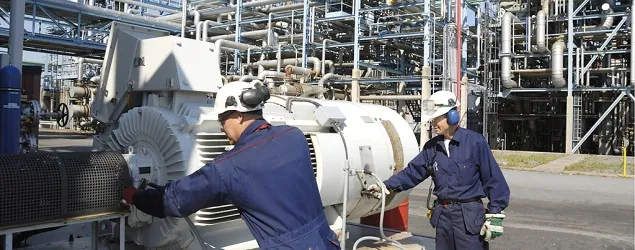
Where RFID fits in oil & gas
- LNG cylinder tracking — every cylinder identified through filling, distribution and return
- Industrial plant solutions — asset visibility across refineries, terminals and processing units
- Domestic user and payment solutions — cylinder delivery and collection tied to the customer account
- Asset management — jigs, rigs, pipes, motors, generators, valves and gauges on one register
- Plant maintenance — service history captured against each tagged asset, not a spreadsheet
- Inspection management — date- and time-stamped proof that each inspection round actually happened
RFID enterprise asset management
RFID Enterprise Asset Management (REAM) is a system that produces process improvement from generation to the field. It spans inventory, financials, warehousing, wires and pipes — and people. Looking at what constitutes an asset, utilities increasingly conclude that virtually everything an organisation possesses is one: information stored in automated systems, recorded on paper, or even passed on by word of mouth.
On the physical side, offshore platforms and onshore operations utilise assets such as jigs, rigs, pipes, motors, generators, valves, calibration equipment, regulators and gauges. These move between vendors and agencies working under SLAs (service level agreements) to keep the establishment and operations running — which is exactly where serialised RFID identification keeps custody and accountability intact.
Advantages of RFID in the oil and gas industry
- Quick, easy, clean and detailed item identification
- Significant reductions in lost and misplaced equipment
- Easier tracking of usage cycles and routine maintenance
- Earlier indication that new parts need to be ordered
- Countless hours saved tracking down specific pieces
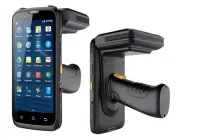
Recommended Identium hardware
- CR400 ceramic on-metal tag — ceramic construction for valves, pipes and high-temperature metal assets.
- RFID metal tags — metal-mount options for motors, generators and skids.
- Rugged RFID tags — built for weather, chemicals and impact in the field.
- CX1500N handheld RFID reader — inspection and maintenance rounds without paperwork.
- UHF gate reader HLR200 — cylinder yard and store gates that log every movement.
Related solutions
Running cylinders, plants or field equipment? Talk to our team — we will pick tags that survive your environment and prove them on your own assets first.
Specifying tags that survive plant conditions
Frequency first. Asset, cylinder and maintenance tracking on a plant is a passive UHF job. In India that means the 865-868 MHz band, delicensed for RFID under WPC’s Short Range Devices (Exemption from Licence) Rules, 2021, which superseded the narrower 865-867 MHz RFID rules of 2005. Confirm the current WPC position before you freeze a specification, and note that our UHF readers and antennas are WPC-approved for India’s licence-exempt UHF RFID band. Passive UHF runs EPC Gen2, standardised as ISO/IEC 18000-63 and marketed as RAIN RFID: bulk reads at a yard gate, typically metres of range on a field round, and no battery to replace. Staff and contractor gate ID cards are a separate job, normally HF 13.56 MHz — a different standard family, to which EPC Gen2 and RAIN RFID do not apply. Our BIS and WPC compliance guide covers what an India specification should actually say.
After frequency, three filters decide whether a tag is still readable at the next turnaround. Nearly everything worth tagging on a plant is metal, and a plain label detunes against it, so on-metal construction is the starting point. Temperature is the second: our CR400 ceramic tag is rated IP68 with a -40 to +100 deg C operating window, and hot process piping or cryogenic LNG surfaces sit outside that — so tag a bracket, handwheel or standoff rather than the pipe wall. Third is fixing. Adhesive is fine indoors; outdoors, under vibration, or where surfaces get blasted during a shutdown, we rivet, cable-tie, epoxy-pot or ultrasonically weld the tag at our New Delhi factory. Custom tag work of that kind typically runs five to ten days.
| Asset | Tag type | Fixing | Typical read range |
|---|---|---|---|
| Valves, gauges, instruments | CR400 ceramic on-metal, IP68 | Adhesive or epoxy | Around 2 m fixed, around 1 m handheld, on metal |
| Motors, pumps, skids | Hard on-metal tag in ABS or PPS | Rivet, screw or epoxy | A few metres, mount-dependent |
| Gas cylinders (LPG/LNG) | On-metal or cable-tie tag at the valve neck | Cable tie or adhesive | Short — curved metal cuts range |
| Hoses, slings, non-metal kit | Rugged sealed UHF tag, IP67 | Cable tie | Several metres off metal |
Those ranges are typical and environment-dependent, not guaranteed figures. Dense pipe racks and steelwork both reflect and shadow, so a tag that reads at several metres in a store can drop to under a metre in a pipe alley, and orientation to the antenna matters as much as distance. Settle tag position, antenna height and reader power from a read test in the actual location rather than from a datasheet number.
Two points buyers often miss. Encode the EPC to your existing equipment or P&ID number instead of creating a second numbering scheme, and use the tag’s user memory — 512 bits on the CR400 — to carry the asset code, so an inspection round still verifies out at the tank farm with no network. Second, settle intrinsic safety before ordering readers: our CX1500N handheld is IP67-rated and built rugged, but it is not supplied as an intrinsically safe device, so reading inside a classified zone has to follow your own HSE and permit-to-work rules.