

Industrial · UHF RFID · Washable
Every Towel. Every Cycle. Tracked.
Commercial laundries lose 10–15% of linen inventory to shrinkage, misplacement, and damage. Identium’s RFID Laundry Management embeds washable UHF tags rated for 200+ wash cycles at 200°C — every sheet, towel, uniform, and surgical drape is counted, in and out.
Built for Scale, Precision & Speed
Commercial laundries lose 10–15% of linen inventory to shrinkage, misplacement, and damage. Here are the capabilities you get with Identium.
Washable UHF Tags
Sewing, iron-on, or button tags survive 200+ wash cycles, 200°C temperatures, and harsh chemicals.
Tunnel Readers
Full carts read in 2 seconds — entire loads counted as they enter or exit the facility.
Customer Allocation
Per-room, per-floor, per-facility tracking — bill the right cost centre for the right linen.
Patient-linen Tracing
Hospitals trace linen through isolation wards for infection-control compliance.
Loss & Lifecycle Analytics
Track each item from purchase, through every wash, to end-of-life.
Auto-Sorting
Conveyor readers route items to the right staff member, folding station, or delivery cart.
Billing Automation
Auto-generate invoices based on pieces processed per customer — no manual counts.
Inventory Replenishment
Low-stock alerts trigger procurement before you’re short on surgical drapes or towels.
Uniform Issuance
Staff check-out uniforms via RFID desktop readers — lost/damaged uniforms visible instantly.
Three-Layer RFID Architecture
A clean flow from tagging to real-time dashboards — built for operational scale.
Sew/iron-on the tag
Washable UHF tags attached at manufacture or during first wash cycle.
Tunnel read in/out
Carts roll through tunnel readers; every piece counted, attributed, and billed.
Lifecycle analytics
From purchase to retirement — every cycle logged for cost control and compliance.
Recommended Products
Enterprise-grade UHF/HF RFID hardware, sourced from our sister store IndiaRFIDStore.com.

Washable RFID Laundry Tag
Sewing/iron-on washable RFID tags rated for 200+ wash cycles at 200°C for linen tracking.
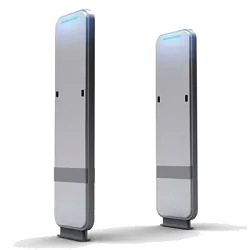
UHF RFID Gate Reader
Fixed UHF gate reader for automated entry/exit tracking at warehouse doors and checkpoints.
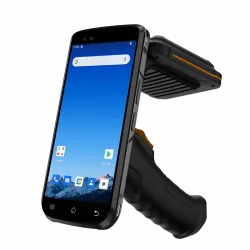
RFID Handheld Reader
Portable UHF scanners with Wi-Fi/BT connectivity for on-the-go asset verification and mobile audits.
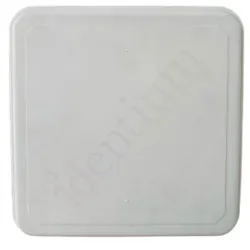
UHF RFID Antenna
Circular-polarised 9dBi/12dBi UHF antennas — extend reader range and multi-port coverage.
Deployed Across These Industries
Identium is trusted by organisations in manufacturing, retail, healthcare, logistics, events, and the public sector.
Hotels & Resorts · Hospitals · Cruise Ships · Restaurant Linens · Uniform Rental · Gym Towels · PPE Tracking · Airline Cabin Linen
End linen loss.
Let’s pilot RFID on one laundry line and prove the ROI.
Want the full technical deep-dive? Explore Laundry Management on Identium One →
Related: Hospitality · Healthcare & Pharma
Where the reads happen, and what makes them reliable
Linen tracking is a passive UHF job. In India that means the 865–868 MHz band, which the WPC keeps licence-exempt for RFID — the position as of 2026, worth confirming against the current WPC notification and BIS requirements before you freeze a specification — read with EPC Gen2 / ISO/IEC 18000-63 tags, because the whole point is counting a loaded trolley in one pass. HF at 13.56 MHz and NFC read at only a few centimetres, which would put you back to handling every sheet individually. Identium’s UHF readers and antennas are WPC-approved for India.
The constraint that catches sites out is water. UHF energy is absorbed by moisture, so a cage of soiled, damp linen reads less predictably than the same items dry and folded on the clean side. Build the billable count on the clean side and treat the soiled intake read as indicative. Metal cages add the other complication: they reflect RF, which can help reads inside the cage but can equally pull in tags from the trolley parked alongside. Circular-polarised antennas cope with linen lying at every possible angle, while trimmed RF power, an RSSI threshold and a defined read window keep the neighbour’s stock out of your count.
| Read point | Typical hardware | Why this one |
|---|---|---|
| Tag issue and encoding | UHF Desktop Reader 103 | Adjustable read zone of up to about 30 cm, deliberately short, so stray tags on the bench are not swept into the batch; HID keyboard output types the tag ID straight into your linen software |
| Soiled intake and sorting | IHZ4 4-port fixed reader with circular-polarised antennas | Four ports hit a cage from several angles; RF output adjusts in 1 dBm steps, and relay outputs drive lamps at the station |
| Clean despatch doorway | HLR200 gate reader | Two-way direction sensing separates out from in, so a trolley wheeled back does not double-count |
| Ward or linen cupboard audits | CX1500N handheld | Spot counts where fixed infrastructure is not justified |
Treat every distance here as typical rather than guaranteed. What you actually achieve depends on the tag, the antenna, how the hardware is mounted, and how wet and densely packed the load is — so confirm the numbers in a trial on your own floor before you commit to a layout.
Two practical points on tags. First, placement decides survival as much as construction does: a tag anchored flat in a hem or side seam takes less punishment in the extractor than one left to flap loose in a fold, and if the garments run through a hot calender, specify a construction rated for ironing and not only for washing. Second, plan for attrition. Tags do fail, and a piece that has stopped reading looks identical to a piece that has been stolen. A “not seen in N cycles” rule, rather than an instant write-off, keeps your loss figures honest.