

We supply RFID Time Attendance Systems that automate attendance and in/out times for every type of organisation — management sees the movement of employees, staff and contractors inside the premises as it happens, with no registers and no queueing at a fingerprint scanner.
How it works
Issue
Each person carries an RFID card or wristband encoded with their employee ID — one credential, enrolled once at HR.
Tap
HF terminals suit office doors; long-range UHF readers at factory gates record workers as they walk or drive through. The first tap of the day stamps the shift start, the last closes it — normal days need no supervisor approval.
Compute
The attendance engine applies your shift definitions, overtime rules and late-in/early-out exceptions, then delivers clean, payroll-ready timesheets automatically.
For hands-free clocking of large shifts, see our gate-based automatic time attendance solution. There is a safety dividend too: because the system always knows who is on-site, a muster report during a fire drill or real evacuation is ready in about three minutes, accounting for every employee, contractor and visitor.
What’s included

RFID Cards
Employee credentials, printed
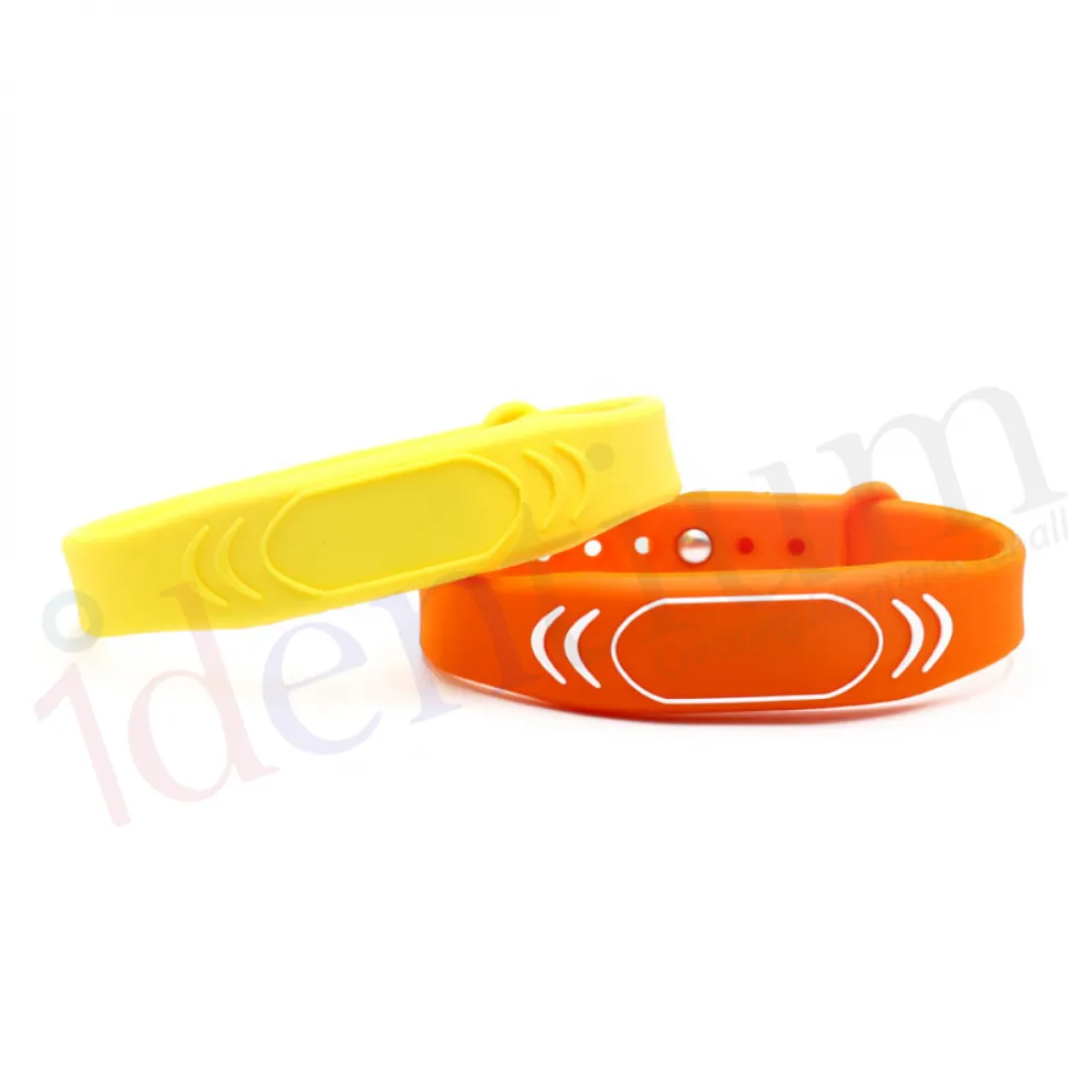
C07 Wristband
Wearable credential option
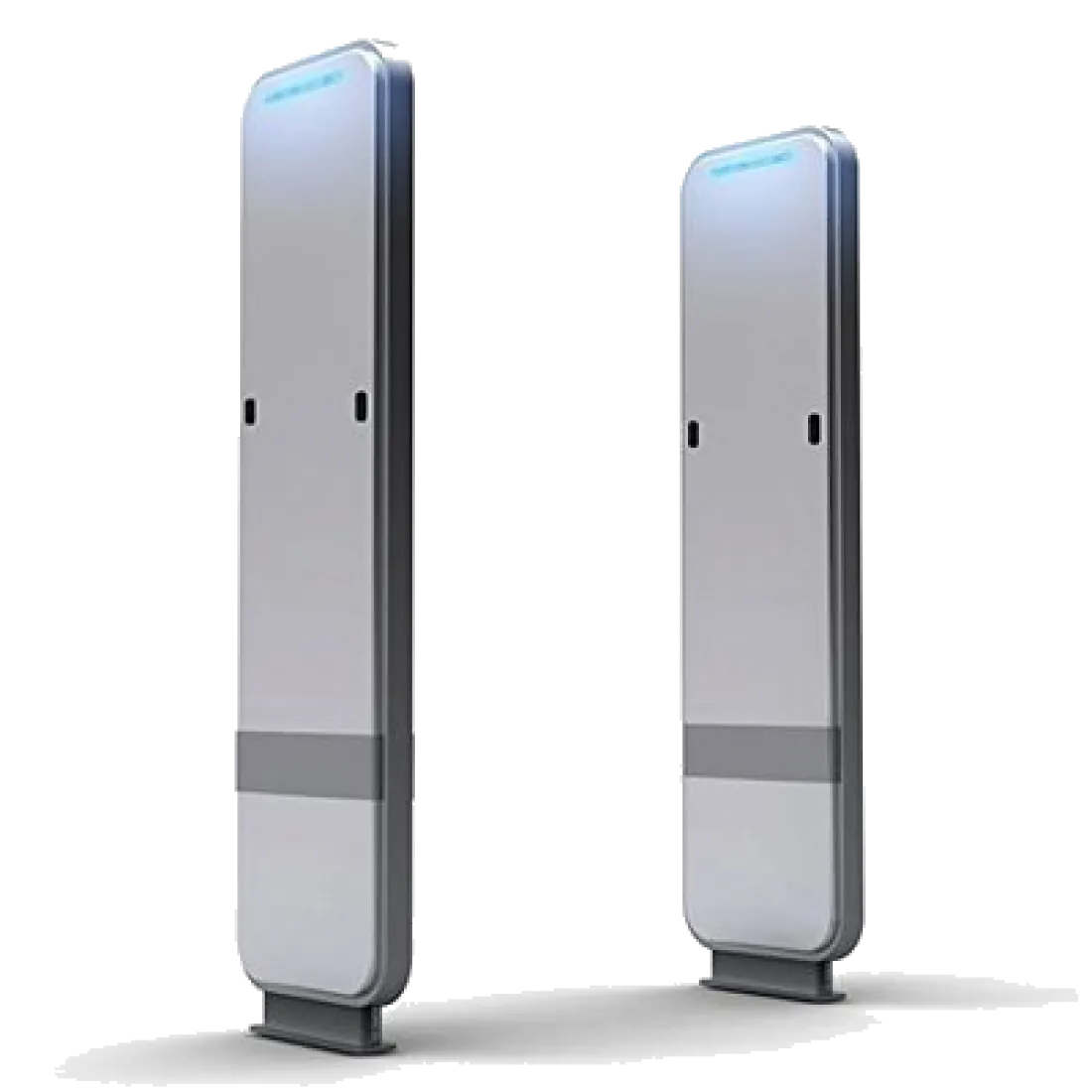
HLR200 Gate Reader
Gate clocking for large shifts
HF Readers
Indoor door terminals
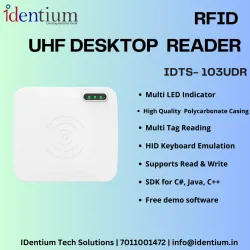
UHF Desktop Reader 103
Card enrolment at HR
The terminal range spans every credential technology in use: Prox, vicinity ISO 15693, ISO 14443A, crypto ISO 14443B, dual-protocol, biometric fingerprint+Prox, and GPRS-enabled models for remote sites. The attendance software handles shift and OT rule configuration, exception workflows, muster reports and geo-fencing, and pushes attendance automatically into the HR platforms Indian companies actually use — Darwinbox, SAP SuccessFactors, Keka and Zoho People.
Key benefits
- Terminals, cards and software come from one manufacturer, so enrolment, clocking and payroll export work as a single system from day one.
- Multi-technology coverage — Prox, ISO 14443, ISO 15693, biometric and GPRS — lets one platform serve offices, plants and remote sites together.
- Real-time data means supervisors see late-ins and missing workers during the shift, not at month-end.
- Robust, flexible pay rules enforce complex work policies automatically — reducing unwanted overtime and raising accuracy across the organisation.
- Deployed across Indian factories, offices and institutions, supported from New Delhi.
Related: Manufacturing WIP · Education · Healthcare & Pharma
Choosing the frequency and the read point
The frequency decision belongs to each read point, not to the site as a whole, and a working attendance estate usually carries more than one. Where a person deliberately presents a credential — an office door, a single-file turnstile — the very short read distance of HF 13.56 MHz (ISO/IEC 14443A, Mifare Classic and DESFire) is the feature rather than the limitation: the read can only belong to whoever is standing at the terminal, and DESFire-class cards carry authenticated memory that can hold a canteen balance or a locker credential alongside the employee ID. Passive UHF at 865-868 MHz (EPC Gen2 / ISO/IEC 18000-63, marketed as RAIN RFID) earns its place where the point is hands-free clocking of a crowd — a factory gate at shift change, or a campus entrance a whole shift crosses at once. Older 125 kHz prox cards (TK4100, EM4200) still work for plain in and out, but they are read-only IDs with no on-card security, so treat an existing prox estate as something to live with rather than something to extend.
| Read point | Credential | Typical read distance | Why |
|---|---|---|---|
| Office door, turnstile, single lane | HF 13.56 MHz card, ISO 14443A | Centimetres | Deliberate tap, authenticated on-card memory, little chance of a stray read |
| Existing prox estate | LF 125 kHz card (TK4100, EM4200) | Centimetres | Fine for plain in/out; read-only, no on-card security |
| Gate at shift change | Passive UHF card, lanyard tag or wristband | Typically a few metres across a portal | Walk-through clocking, no queue at peak |
Those distances are typical, not guaranteed. Metal doors and frames, reinforced concrete, nearby cabling, antenna gain and aim, transmit power and the number of bodies in the lane all move them, which is why a UHF lane is worth trialling in place before the layout is fixed.
Two things catch out first-time UHF attendance installs. The first is the shape of the read zone. UHF does not stop politely at the gate frame, so a portal left at full transmit power can log people walking along the corridor behind it or standing outside waiting. Trim the power down to the lane, aim the antennas inward, and specify a portal with two-way direction sensors so the reader reports in or out as the tag passes between the panels, instead of leaving the software to infer direction from the order of reads.
The second is the human body, which detunes UHF. A UHF card in a shirt pocket, flat against the chest, will often read worse than the same card on a lanyard hanging clear, or a UHF wristband worn on the wrist. Trial the credential the way staff will actually carry it — not held out in the hand — before committing to a form factor for the whole workforce.
Two points specific to India. As of 2026, passive UHF here runs in the delicensed 865-868 MHz band notified under the 2021 WPC short-range-device rules, and equipment is approved under those rules; our UHF readers and antennas are WPC-approved for India’s licence-exempt UHF RFID band, and the current position is worth confirming against WPC and BIS guidance for your own project. And because a gate is no use if the link drops mid-shift, specify a reader with inbuilt memory and buffer cache, so reads are held locally and synced when connectivity returns — how much of a shift that covers depends on how the deployment is architected.