

Retail · Apparel · UHF RFID
Fashion retail, Size-perfect.
The apparel industry runs on sizes, colours, and fast-moving trends. Identium’s RFID for fashion retail delivers SKU-level real-time truth — so every size and colour is exactly where it should be, fitting rooms upsell, and BOPIS orders fulfil in minutes.
Powerful Features
Built for Scale, Precision & Speed
The apparel industry runs on sizes, colours, and fast-moving trends. Here are the capabilities you get with Identium.
Size-level Visibility
Know exactly which sizes of which colour of which style you have — across every store.
Smart Fitting Rooms
RFID reader in the fitting room detects items tried on; sales assistants can push alternate sizes/colours.
BOPIS Fulfilment
Buy-online-pickup-in-store orders picked in minutes — RFID confirms the exact item.
Hang-tag Integration
Works with your existing hang-tags — RFID inlays embedded at source or in-store.
Trend Analytics
Which sizes/colours are tried vs purchased? Let data shape next season’s buy.
Inter-store Transfers
Auto-suggest transfers: store A has 20 XL, store B has 0. Move inventory to demand.
Markdown Management
Identify slow-movers before they become markdown write-offs.
Mobile Associates
Sales associates use handhelds to locate any size of any style in seconds.
Receiving Automation
Carton-level receiving with automatic discrepancy detection — speed of gate-read throughput.
How It Works
Three-Layer RFID Architecture
A clean flow from tagging to real-time dashboards — built for operational scale.
RFID hangtags
UHF inlays embedded in hangtags at the manufacturer or your DC.
Store-wide readers
Handheld for aisles, fitting-room readers, exit-gate for loss prevention.
Omnichannel inventory
Real-time inventory feeds POS, ecommerce, BOPIS — every channel on the same truth.
Hardware & Tags
Recommended Products
Enterprise-grade UHF/HF RFID hardware, sourced from our sister store IndiaRFIDStore.com.
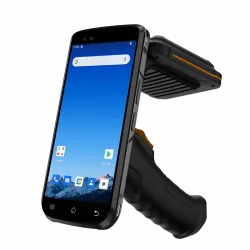
RFID Handheld Reader
Portable UHF scanners with Wi-Fi/BT connectivity for on-the-go asset verification and mobile audits.

UHF RFID Label (H10)
High-performance UHF label for non-metallic items — cartons, books, plastic cases, inventory labelling.
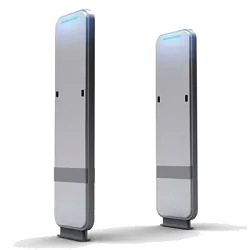
UHF RFID Gate Reader
Fixed UHF gate reader for automated entry/exit tracking at warehouse doors and checkpoints.
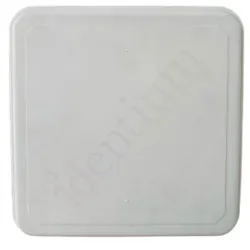
UHF RFID Antenna
Circular-polarised 9dBi/12dBi UHF antennas — extend reader range and multi-port coverage.
Use Cases
Deployed Across These Industries
Identium is trusted by organisations in manufacturing, retail, healthcare, logistics, events, and the public sector.
Fashion Chains · Indian Ethnic Wear · Footwear · Accessories · Outerwear · Kidswear · Innerwear · Sportswear
Win fashion retail.
RFID pilot on one store in 6 weeks — full chain ROI inside 12 months.
Want the full technical deep-dive? Explore Apparel & Fashion Retail on Identium One →
Related: Luxury Retail · Manufacturing · Logistics & Warehousing
Running production too? See our factory-side guide to RFID in textile and garment manufacturing.
Been asked to source-tag by a retailer? Read the supplier requirements guide to retailer RFID mandates.
What Decides Whether an Apparel RFID Rollout Reads Well
Garment programmes run on passive UHF in India’s delicensed 865–868 MHz band, on EPC Gen2 (ISO/IEC 18000-63) chips, marketed as RAIN RFID. The reason is bulk reading: a paper hang tag typically answers from a couple of metres — though the figure moves with the tag, the reader and what is packed around it — so one sweep can count a whole rack, and often a packed carton. HF 13.56 MHz and NFC work at a few centimetres, which suits a staff access card and rules them out for a full cycle count.
The problems that surface on site are physical rather than software:
- Metal and moisture detune the inlay. Rivets, zips and foil prints sit millimetres from the antenna. Hang the tag free at the collar or waistband loop, not tucked into a pocket.
- Stacked stock shields itself. Folded innerwear and dense knitwear form tag-on-tag piles. Lower the power and sweep slower there; raising it just pulls reads from the next aisle.
- Fitting rooms need under-read, not over-read. A small, low-gain antenna behind the mirror reports that cubicle; a high-gain one logs garments nobody carried in.
- Mind the stockroom wall. Site the exit portal so its field does not reach through plasterboard into back-of-house stock.
- Serialise, do not just SKU. A unique serial per piece ties returns, transfers and gate events to an individual garment.
| Where | Suitable hardware | Why it fits |
|---|---|---|
| Shop-floor cycle counts | Android UHF handheld (CX1500N) | Power can be dialled down aisle by aisle as stock density changes |
| Fitting room | Fixed reader, single small low-gain antenna | Keeps the field inside one cubicle instead of the next |
| Store exit | UHF gate reader (HLR200) | Portal geometry covers the door opening, not the stockroom behind it |
| Goods-in receiving | Multi-port fixed reader, 9–12 dBi circular-polarised antennas | Circular polarisation copes with tags arriving at any orientation |
| Tagging and encoding | Desktop RFID label printer | Prints the artwork and encodes the tag in one pass |
| Tag choice | Paper or card hang tag; washable sewn-in label if tracked for life | Tag body matched to how long the piece stays tracked |
Read ranges above are typical and depend on the environment, not guaranteed. The UHF band for RFID in India is the delicensed 865–868 MHz allocation administered by WPC; our UHF readers and antennas supplied for India are WPC-approved for India’s licence-exempt UHF RFID band, and Identium is BIS certified. Confirm the current position with WPC and BIS for your own deployment. Custom hang tags — printing, serial numbering, encoding — typically run a 5–10 day turnaround from our New Delhi factory.
Related reading
- Specifying the tag? See RFID apparel tags and inlays.
- Fitting exit gates? See RFID retail loss prevention portals.
- Sizing a pilot? See scoping an RFID project around read range and environment.