

Agriculture · LF/UHF RFID
Every Animal. Every Record.
Modern dairy farms, cattle ranches, poultry operations, and aquaculture facilities rely on individual-animal identification. Identium’s RFID Livestock Tracking issues durable ear tags, logs breeding & health records, tracks dairy yields, and supports regulatory traceability.
Powerful Features
Built for Scale, Precision & Speed
Modern dairy farms, cattle ranches, poultry operations, and aquaculture facilities rely on individual-animal identification. Here are the capabilities you get with Identium.
Durable Ear Tags
LF or UHF ear tags designed for years of field life — sunlight, rain, rubbing.
Breeding & Parentage
Full lineage tracking — dam, sire, offspring — with breeding-cycle management.
Vaccination Records
Per-animal vaccination history, booster reminders, disease-outbreak tracing.
Milk Yield Tracking
RFID reader at milking parlour logs yield per animal per cycle.
Weight & Growth
Handheld reads at weigh-bridge correlate weight to genetics and feed program.
Health Monitoring
Flag animals with abnormal patterns — reduced feed, missed milkings, unusual movement.
Regulatory Compliance
electronic ID traceability built to ISO 11784/11785, the standard export programmes are written around.
Farm-to-table Traceability
Per-animal record from birth through processing — premium for organic/traceable markets.
Mobile Farm App
Farm hands log observations and treatments via a phone app tied to the animal’s RFID.
How It Works
Three-Layer RFID Architecture
A clean flow from tagging to real-time dashboards — built for operational scale.
Ear-tag at birth
RFID ear tags attached to every animal — registered in the herd master.
Read in pens & parlour
Handheld reads during health checks; fixed readers at milking parlour and weigh-bridge.
Farm intelligence
Breeding, health, yield, and compliance records in one platform.
Hardware & Tags
Recommended Products
Enterprise-grade UHF/HF RFID hardware, sourced from our sister store IndiaRFIDStore.com.
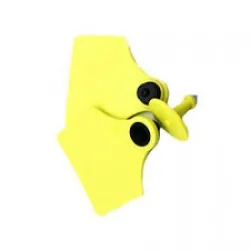
RFID Livestock Ear Tag
Durable LF/UHF ear tags for cattle, sheep, goat — individual animal identification and records.
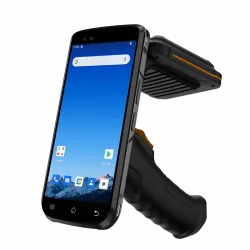
RFID Handheld Reader
Portable UHF scanners with Wi-Fi/BT connectivity for on-the-go asset verification and mobile audits.

UHF RFID Gate Reader
Fixed UHF gate reader for automated entry/exit tracking at warehouse doors and checkpoints.
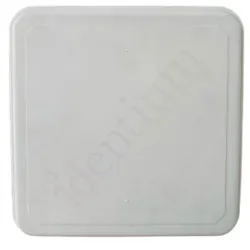
UHF RFID Antenna
Circular-polarised 9dBi/12dBi UHF antennas — extend reader range and multi-port coverage.
Use Cases
Deployed Across These Industries
Identium is trusted by organisations in manufacturing, retail, healthcare, logistics, events, and the public sector.
Dairy Farms · Cattle Ranches · Sheep Farming · Goat Farming · Poultry · Swine · Aquaculture · Govt. Livestock Dept.
Smart farming starts here.
Pilot RFID on one herd — scale across every pen and parlour.
Want the full technical deep-dive? Explore Livestock Tracking on Identium One →
Related: Slaughter Houses · Pet Management · Public Distribution
Picking the frequency and the read points before you tag a herd
The animal is the hardest part of the RF environment. Cattle are largely water, and water absorbs and detunes UHF energy, so a UHF ear tag on a wet ear behaves nothing like the same tag on a carton. Low frequency (125/134 kHz) works by magnetic near-field coupling at short range and is far less affected by mud, dung or a wet hide, which is why LF remains the long-established choice for identifying one animal at close quarters. UHF at 865-868 MHz — India’s licence-exempt band under WPC as of 2026 — reaches further and can log several animals in one pass. Neither is better in the abstract; the read point decides.
| LF ear tag (125/134 kHz) | UHF ear tag (865-868 MHz) | |
|---|---|---|
| Standard wording | ISO 11784/11785, FDX-B at 134.2 kHz | EPC Gen2 (ISO/IEC 18000-63), marketed as RAIN RFID — passive UHF only |
| Typical read | Centimetres at a time, one animal | Typically a few metres, falling off with tag orientation and a wet hide |
| Group or gateway reads | Not practical — one animal at a time | A small group per pass, if the antennas are placed well |
| Mud, dung, wet coat | Very little effect | Noticeable loss; plan for it |
| Suits | Parlour stall, crush, weigh crate, handheld checks | Race exits, loading gates, pen entrances |
Treat those ranges as indicative rather than specified: what you actually get depends on the reader, the antenna, tag orientation, where the animal is standing and how much metal surrounds it, so prove it with a trial at your own race or parlour before you commit to a layout.
Read points deserve as much thought as the tag. A cattle race and headlock gates are often galvanised steel, and metal that close detunes a UHF antenna bolted flat to the frame; stand the antenna off the metal, aim it across the animal’s path rather than straight down the race, and commission it with animals actually in position instead of an empty pen. Wet, muddy animals in a crowded race are the worst case, so test then, not on a dry morning. At the parlour the short range of LF is an advantage, because it will not pick up the cow in the next stall.
Tag build decides whether you are still reading the whole herd several seasons in. Our livestock ear tags are moulded from thermoplastic polyurethane as a two-piece male-female lock that goes in with a standard applicator, and the visual number is laser-marked rather than ink-printed, so it does not fade the way ink can under sun, mud and rubbing — and the number on the tag keeps matching the ID encoded in the chip. Tags can be encoded and numbered to your own herd or scheme numbering. Identium is BIS certified and our UHF readers and antennas are WPC-approved for India’s licence-exempt UHF RFID band (our position as of 2026; WPC and BIS remain the authorities to verify against). Customised tag orders typically ship in 5-10 days, after the units are tested in-house.
Related reading
- Comparing materials and frequencies before you order? See the animal and cattle ear tags we manufacture.
- Working to a Pashu Aadhaar or INAPH-style numbering scheme? Read our cattle ear tag and Pashu Aadhaar guide.
- Not sure what range you will actually get in your shed? Start with scoping an RFID project around read range and environment.