

Enterprise · HF/UHF RFID
One Tap. Every Door. Tracked.
Identium’s RFID Access Control & Attendance combines touchless entry with automatic time-and-attendance logging. Hygienic RFID cards replace fingerprint scanners, doors open in milliseconds, and HR gets clean timesheet data — all in one platform.
Built for Scale, Precision & Speed
Identium’s RFID Access Control & Attendance combines touchless entry with automatic time-and-attendance logging. Here are the capabilities you get with Identium.
Touchless Access
Card or wristband tap — no fingerprint pads to clean, no PIN codes to remember.
Automatic Attendance
First tap in = start of shift; last tap out = end. No supervisor approvals needed for normal days.
Zone-based Permissions
Engineer zone, manufacturing floor, server room — each employee has only the access they need.
Muster & Evacuation
During drills or emergencies, instantly see who’s on-site and accounted for.
Visitor Management
Temporary RFID badges for visitors — time-bound, area-restricted, auto-expire.
Shift & Overtime Rules
Configurable shift definitions, OT calculation, late-in/early-out exceptions.
HR Integration
Auto-push attendance to Darwinbox, SAP SuccessFactors, Keka, Zoho People.
Anti-tailgating
Optional image capture or infrared beam pairing to prevent passback/tailgating.
Outdoor Factories
UHF long-range for large gates; HF contact for doors — the right tech for each access point.
Three-Layer RFID Architecture
A clean flow from tagging to real-time dashboards — built for operational scale.
Issue cards
HF or UHF RFID cards / wristbands encoded with employee ID and access permissions.
Readers at doors
Wall-mount HF readers for doors; UHF long-range readers for gates and turnstiles.
Attendance + HR sync
Clean timesheet data flows to HR; muster reports generate on demand.
Recommended Products
Enterprise-grade UHF/HF RFID hardware, sourced from our sister store IndiaRFIDStore.com.
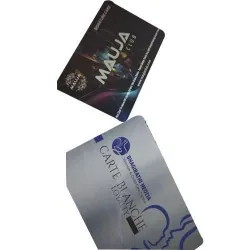
RFID Smart Card
HF / UHF / dual-frequency RFID cards for access, attendance, library, and ID use-cases.
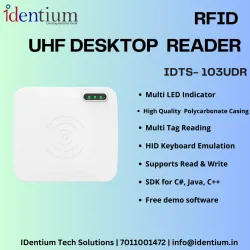
UHF Desktop Reader
Compact desk-mounted reader/writer for encoding tags, issuing cards, and point-of-service scanning.
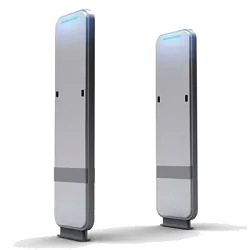
UHF RFID Gate Reader
Fixed UHF gate reader for automated entry/exit tracking at warehouse doors and checkpoints.
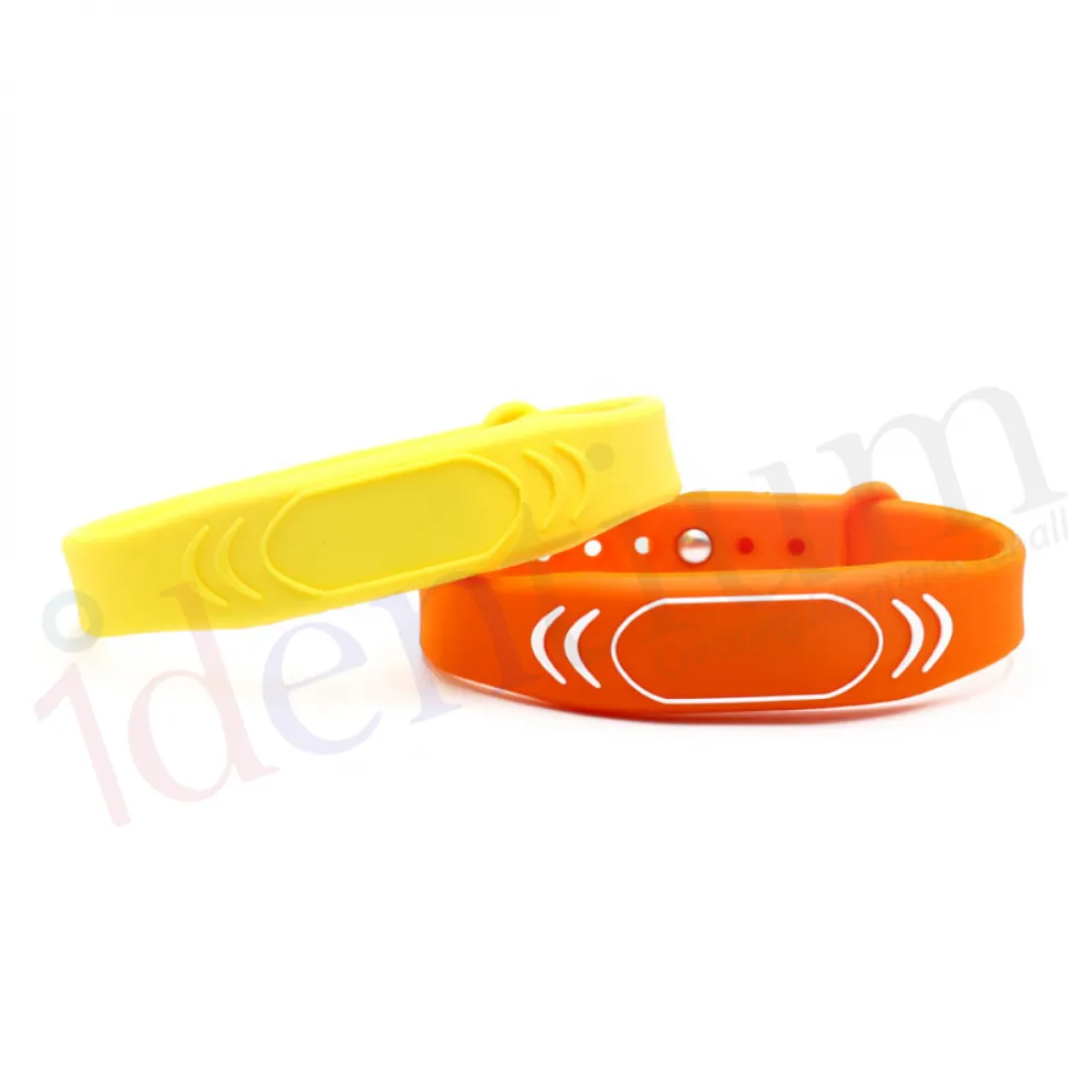
RFID Silicone Wristband
Comfortable silicone RFID wristband for events, attendance, patient ID, and cashless payments.
Deployed Across These Industries
Identium is trusted by organisations in manufacturing, retail, healthcare, logistics, events, and the public sector.
Corporate Offices · Factories · Hospitals · Schools & Colleges · Government Offices · Hotels · Labs · Gyms & Clubs
Access control, done right.
Pilot one building — our team handles wiring, cards, and HR integration.
Want the full technical deep-dive? Explore Access Control & Attendance on Identium One →
Related: Manufacturing WIP · Education · Hospitality
Choosing the frequency and credential for each access point
Range is the first thing buyers ask about and the last thing that should decide a door. What matters at an access point is intent: a server room should open only when someone deliberately presents a credential, while a vehicle gate should open without anyone winding down a window. Reading further is a feature at the barrier and a liability at the door, because a card sitting in a bag can be read without its holder doing anything at all.
That is why HF at 13.56 MHz is the usual default for doors. Chips in the ISO 14443 family such as Mifare Classic and DESFire read over a few centimetres in typical conditions and hold keyed memory on the card itself, so a tap is a decision rather than an accident. Passive UHF at 865-868 MHz is EPC Gen2 (ISO/IEC 18000-63, marketed as RAIN RFID) and, depending on the antenna, the mounting and how the card is carried, can be read from metres away — the right behaviour at a boom barrier and the wrong behaviour on a restricted door. LF at 125 kHz still turns up on older proximity estates: a read-only number with no security on the card, tolerable for an internal stationery store and not something to extend into a cash office. If you have inherited one, plan the migration to HF or UHF rather than adding to it.
| Access point | Frequency | Typical read distance (environment-dependent) | Why it suits |
|---|---|---|---|
| Office doors, server rooms, labs | HF 13.56 MHz (ISO 14443) | A few centimetres | Deliberate tap, keyed memory on the card |
| Legacy proximity doors | LF 125 kHz | A few centimetres | Read-only ID, low-risk internal use only |
| Vehicle gates, boom barriers | UHF 865-868 MHz (EPC Gen2) | Metres with a fixed reader, varying with antenna and mounting | Hands-free windscreen read |
| Wide pedestrian lanes, muster points | UHF 865-868 MHz (EPC Gen2) | Metres, varying with how the card is carried | Throughput without a queue at the reader |
Credential choice matters as much as frequency. Mifare Classic is adequate for closed-loop, low-risk sites, while DESFire is the better answer wherever encryption and key management are written into your security policy — a call for your security team rather than for whoever compares card prices. We encode card memory and EPC data, print artwork and serial-number cards in-house, and each unit is tested before dispatch. Where one person needs both a door and a car park, a dual-frequency card can carry HF and UHF in a single credential instead of issuing two.
Where a credential on its own is too weak — server rooms, cash handling, restricted wards — the card asserts an identity and a biometric confirms it. Every RFID reader we supply ships with an SDK, demo app and source code, so your integrator can bind that second check to the door controller and the identity records you already run rather than to a closed box. Identium is BIS certified, and our UHF readers and antennas are WPC-approved for India’s licence-exempt UHF RFID band. India’s allocation for low-power RFID is 865-868 MHz, delicensed under the 2021 WPC short-range-device rules, and it is worth confirming the current position with WPC before a specification is fixed.