

Events · UHF RFID
Every Delegate. Every Session Tracked.
Identium’s RFID Delegate Tracking turns any conference, exhibition, or corporate event into a data-rich experience. RFID wristbands or badges capture check-ins, session attendance, booth visits, and networking moments — all in real-time.
Explore in depth → · Request Quote
Built for Scale, Precision & Speed
Identium’s RFID Delegate Tracking turns any conference, exhibition, or corporate event into a data-rich experience. Here are the capabilities you get with Identium.
Instant Check-in
RFID wristband/badge tap — 2 seconds per delegate, no queues at the registration desk.
Session Attendance
Gate readers at every session room automatically log who attended what, and for how long.
Exhibitor Lead Capture
Sponsors and exhibitors pull delegate profiles instantly when a badge is tapped at their booth.
Networking Graph
Track which delegates met which — powerful for matchmaking and follow-ups.
Real-time Dashboard
Organisers see live headcount, session popularity, and engagement scores.
Personalised Follow-ups
Auto-email delegates the decks from sessions they attended — higher engagement post-event.
Branded Wristbands
Custom-printed silicone wristbands in event colours — premium feel with embedded chip.
Mobile Companion App
Delegates scan their wristband on their phone for schedule, tickets, and networking.
CRM Integration
Push every interaction into Salesforce, HubSpot, Zoho — ready-made ROI for sponsors.
Three-Layer RFID Architecture
A clean flow from tagging to real-time dashboards — built for operational scale.
Issue wristbands
RFID wristbands pre-encoded with delegate ID handed out at entry or pre-shipped.
Gate readers at rooms
UHF gate readers silently capture entry/exit for every session and exhibitor booth.
Live dashboard + exports
Organisers and sponsors get real-time analytics and post-event CRM pushes.
Recommended Products
Enterprise-grade UHF/HF RFID hardware, sourced from our sister store IndiaRFIDStore.com.
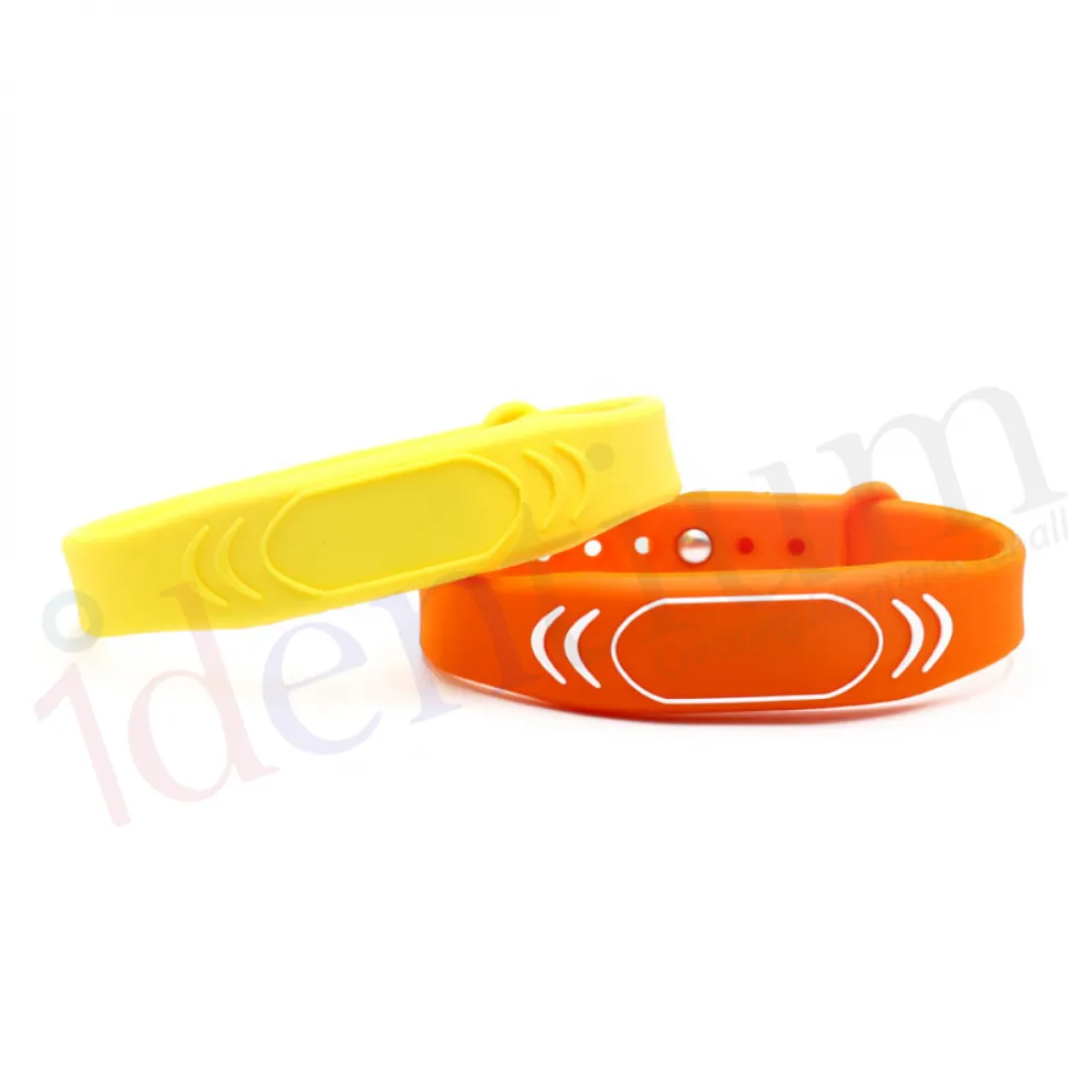
RFID Silicone Wristband
Comfortable silicone RFID wristband for events, attendance, patient ID, and cashless payments.
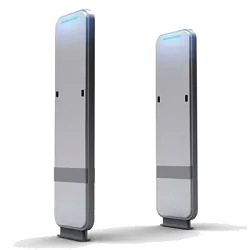
UHF RFID Gate Reader
Fixed UHF gate reader for automated entry/exit tracking at warehouse doors and checkpoints.
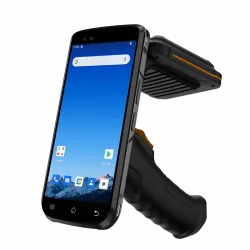
RFID Handheld Reader
Portable UHF scanners with Wi-Fi/BT connectivity for on-the-go asset verification and mobile audits.
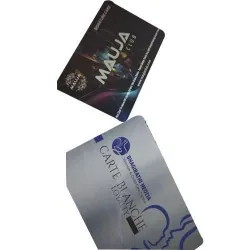
RFID Smart Card
HF / UHF / dual-frequency RFID cards for access, attendance, library, and ID use-cases.
Deployed Across These Industries
Identium is trusted by organisations in manufacturing, retail, healthcare, logistics, events, and the public sector.
Conferences · Trade Shows · Seminars · Corporate Meets · Expos · Academic Events · Product Launches · Award Nights
Hosting an event?
Let us power your next conference or trade show with RFID delegate tracking.
Related: Hospitality · Education · Tourism
Choosing the badge and reader setup for delegate tracking
Delegate tracking is one of the few event applications where the frequency question has two answers, and getting it wrong only shows up on the day.
For hall entry and session attendance, passive UHF is the band that fits. In India that means 865–868 MHz, which WPC keeps delicensed for RFID — position as of 2026, so confirm the current BIS and WPC requirements before you commit to hardware — running EPC Gen2, ISO/IEC 18000-63, marketed as RAIN RFID. It suits the job because delegates arrive in clusters and will not stop to tap. A fixed reader can reach in the region of 10–15 m on passive UHF in clear, open conditions, but treat that as a ceiling rather than a promise: a badge worn flat against a body, in a crowd, or near metal and glass reads a good deal shorter. At a session door you deliberately turn the power down anyway — you want the people walking in, not the corridor.
Where a phone does the reading, you need HF at 13.56 MHz (NFC, typically ISO 14443). Mainstream smartphones have no UHF radio; their NFC hardware is HF only. So if exhibitors are to scan a delegate badge on their own handset rather than a supplied reader — or delegates are to tap their own credential for a schedule — that credential has to carry an HF chip alongside the UHF one. It is the common reason a conference badge ends up dual-frequency, and worth being precise about: EPC Gen2 and RAIN RFID describe only the passive UHF side, while the HF/NFC side sits in the ISO 14443 family. The two bands do genuinely different jobs.
Two physical constraints do most of the damage to attendance data:
- Body shadowing. UHF is absorbed by the human body. A lanyard badge lying flat against the chest, turned away from the antenna, performs well below what a bench test suggests. Antennas on both sides of the lane at roughly chest height, with circular polarisation, make badge orientation matter less.
- Stray reads. Untuned, a doorway reader logs passers-by as attendees. Reduced transmit power, directional antennas, RSSI thresholds and a second antenna to infer direction of travel are what separate “entered” from “walked past”. Expect to tune this on site rather than on a spec sheet.
| Credential | Frequency | How it reads | Suits |
|---|---|---|---|
| PVC/PETG badge card with UHF inlay | 865–868 MHz | Hands-free through doorways | Session counts, main entry |
| Dual-frequency badge (UHF + HF) | 865–868 MHz + 13.56 MHz | Hands-free, plus phone tap | Exhibitors capturing leads on their own phones |
| Silicone wristband | UHF or HF | Worn, hard to leave behind | Multi-day and outdoor events |
| Tyvek or PVC wristband | HF/NFC or UHF | Single use | One-day, high-volume entry |
Whether credentials arrive pre-encoded or are written at the registration desk on a desktop reader, it is worth recording each chip’s factory-set TID alongside the EPC you write. The TID is fixed at manufacture and not rewritable on a standard Gen2 chip, so a re-encoded or copied badge is easier to catch. Custom printing, artwork and serial numbering typically run a 5–10 day turnaround, so settle the design well before the delegate list closes.