

Identium provides RFID for the perfume industry — in-store solutions that improve the customer experience at the point of sale and verify the authenticity of every bottle. RFID in cosmetics and perfumery starts at the factory: we plan the tagging strategy at the manufacturing stage so anti-counterfeit measures are built into the supply chain, with solutions conforming to GS1 global standards and Electronic Product Codes.
Counterfeit perfumery is a global problem on a massive scale — not just in the brand erosion it causes manufacturers, but in the potential harm to users. Combining tamper-evident security RFID labels on the original pack with tamper-evident carton sealing tapes on bulk cartons in transit gives extremely high protection against theft and against counterfeit items being sold through outlet stores.
Where RFID fits in the perfume industry
- Source tagging — RFID labels applied or embedded at the manufacturing stage, encoded to GS1/EPC standards
- Authenticity verification — a read at the counter confirms the bottle is genuine before it is sold
- Tamper evidence in transit — security labels and carton tapes expose any opened pack or carton
- Retail inventory counts — shelf and stockroom stock counted in minutes instead of hours
- Loss prevention — exit readers identify exactly which tagged item left the store unsold
- Point-of-sale experience — faster billing and assisted selling, since each pack identifies itself
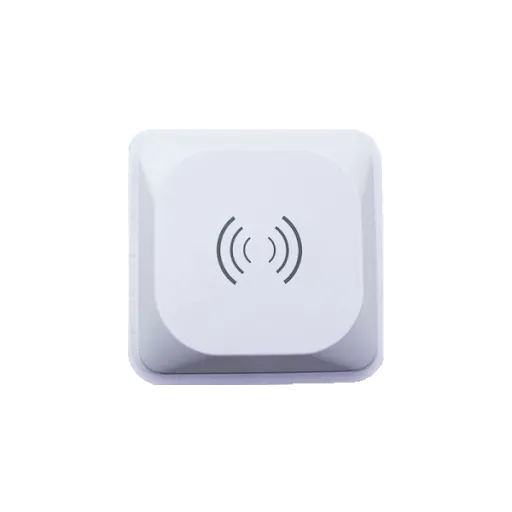
Recommended Identium hardware
- UHF RFID inlays and labels — slim labels for cartons and packs, printable with branding.
- UHF desktop readers — encode labels in production and verify authenticity at the counter.
- CX1500N handheld RFID reader — full-store stock counts and back-room searches.
- UHF gate reader HLR200 — exit and dock-door reading for shipments and loss prevention.
Related solutions
- RFID retail loss prevention
- RFID inventory management
- RFID solutions for the luxury industry
- RFID supply chain management
Protecting a fragrance brand or running perfume retail? Talk to our team — we will design a tagging strategy from production line to point of sale.
Why the packaging is the hard part of the tagging job
Fragrance and cosmetics are awkward categories to tag, and the difficulty is nearly always the packaging rather than the RFID. Passive UHF on the 865–868 MHz band India delicensed for RFID (the WPC allocation, as of 2026) — EPC Gen2 (ISO/IEC 18000-63), marketed as RAIN RFID — suits this work because it reads many packs at once without line of sight. The packaging is what fights back. The liquid in a filled bottle absorbs UHF energy, while metallised caps, foil-laminated gift cartons, mirrored compacts and aerosol body-spray cans reflect and detune a plain label. An inlay that performs well on a bare carton can go nearly silent once it sits on glass, directly over the fill.
Placement and tag format settle most of it:
| Pack type | What goes wrong | Format that usually works |
|---|---|---|
| Glass bottle, filled | the liquid absorbs UHF | tag the outer carton, or try the inlay on the shoulder above the fill line |
| Foil-laminated or metallised carton | reflective face detunes the label | on-metal (anti-metal) UHF tag, or an inlay lifted clear on a foam spacer |
| Counter testers, small vials | tiny footprint, tightly grouped | a small UHF inlay sized to the item, proven on a full tray |
| Aerosol or metal-bodied deodorant | metal body | on-metal UHF hard tag |
| Compacts, palettes, lipsticks | no flat area, dense trays | small inlay on the base, or NFC where the pack faces the customer |
Two things are worth settling at quote stage rather than after the print run. First, agree what the security label is actually made of: a face stock that peels away intact can be lifted off and reapplied to a refilled bottle, so tamper evidence only means something if the label destroys itself on removal — ask your label supplier to confirm that behaviour on your own pack surface. Second, decide whether the customer is meant to verify the pack themselves. Phone tap-to-verify is HF 13.56 MHz NFC — a different chip and standard from UHF, and not EPC Gen2 or RAIN RFID — so a pack that needs both shop-floor counts and a consumer tap needs either two separate inlays or a dual-frequency construction.
Read range here is situational rather than fixed. A distance measured on a bare carton means little once the bottle, the shrink wrap and a stacked tray are in the way, so treat any figure quoted to you as typical for that environment only. Test the chosen inlay on your own filled pack, in the tray you actually ship, before committing to a print run. We encode, serialise and overprint labels to match the artwork, with custom tag work typically running 5 to 10 days.
Related reading
- Want stock control and a customer tap on the same pack? See dual-frequency NFC and UHF RFID tags explained.
- Labels failing near liquid or foil? Work through RFID tag not reading: a troubleshooting guide.
- Exporting cosmetics or fragrance? Read the Digital Product Passport and what it means for Indian exporters.