

Retail · UHF RFID
Shrink Doesn’t Walk Out Anymore.
Retail shrinkage costs Indian retailers an estimated 2–3% of revenue. Identium’s RFID Loss Prevention replaces dumb EAS gates with intelligent UHF portals — every exit event is logged with the exact SKUs, time, and CCTV correlation. From reactive to data-driven.
Powerful Features
Built for Scale, Precision & Speed
Retail shrinkage costs Indian retailers an estimated 2–3% of revenue. Here are the capabilities you get with Identium.
Intelligent Exit Gates
UHF portal readers identify exactly which SKU left, not just “something was tagged.”
POS Correlation
Cross-check gate reads against receipts in real-time — unpaid item leaves = silent alert.
CCTV Integration
Alert automatically bookmarks the CCTV clip of the exit event for loss-prevention review.
Shrink Analytics
Shrink by category, time of day, store, supplier — data you can act on.
Silent Alerts
Configurable discreet alerts to security staff’s mobile — no embarrassing loud alarms.
Employee Theft Detection
Staff-exit patterns, post-close movements, and unusual void patterns surfaced.
Hidden Inlays
Tags embedded in packaging or clothing hem — invisible to shoplifters, readable to the gate.
Return Fraud Guard
Serialised SKUs prevent return-for-refund of items never actually purchased.
Incident Workflows
Every alert becomes a case with assigned owner, evidence, and resolution tracking.
How It Works
Three-Layer RFID Architecture
A clean flow from tagging to real-time dashboards — built for operational scale.
Tag every item
UHF inlays embedded at source — in tags, labels, or packaging, invisible to customers.
Portal gates at exits
Discreet UHF gates at store exits read every tagged item leaving the premises.
Alert + investigate
POS + CCTV correlation turns alerts into actionable cases, not false alarms.
Hardware & Tags
Recommended Products
Enterprise-grade UHF/HF RFID hardware, sourced from our sister store IndiaRFIDStore.com.

UHF RFID Gate Reader
Fixed UHF gate reader for automated entry/exit tracking at warehouse doors and checkpoints.

UHF RFID Label (H10)
High-performance UHF label for non-metallic items — cartons, books, plastic cases, inventory labelling.
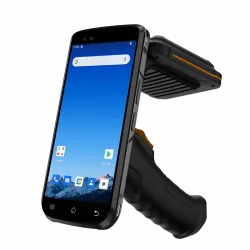
RFID Handheld Reader
Portable UHF scanners with Wi-Fi/BT connectivity for on-the-go asset verification and mobile audits.
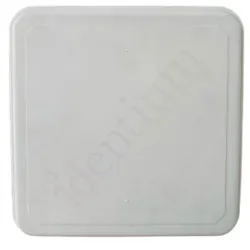
UHF RFID Antenna
Circular-polarised 9dBi/12dBi UHF antennas — extend reader range and multi-port coverage.
Use Cases
Deployed Across These Industries
Identium is trusted by organisations in manufacturing, retail, healthcare, logistics, events, and the public sector.
Apparel · Jewellery · Electronics · Pharmacy · Liquor Retail · Department Stores · Hypermarkets · Footwear
Cut shrink, keep margin.
Book a loss-prevention consult — we’ll size the opportunity for your chain.
Want the full technical deep-dive? Explore Retail Loss Prevention on Identium One →
Related: Luxury Retail · Healthcare & Pharma · Perfume Industry
Frequency, tag choice and gate geometry
A retail loss-prevention portal is a passive UHF job. In India that means the 865–868 MHz band, which WPC has delicensed for RFID use — the position as of 2026, and still worth confirming against the current WPC notification before you specify hardware. UHF is the only common RFID frequency whose read zone can typically span a shop doorway and pick up a basketful of tagged items in a single pass; how wide that zone actually runs depends on the antennas, the power setting and what the doorway is built from. The tags are EPC Gen2 (ISO/IEC 18000-63, marketed as RAIN RFID — a passive-UHF-only standard), so each unit carries its own serial rather than the plain on/off bit of an EAS label. HF at 13.56 MHz and NFC are the wrong tool at an exit: in practice they read at centimetre range and expect a deliberate tap.
That serial changes how the gate behaves. There is no physical deactivation or detach step at the till, as there is with an EAS tag — the POS marks that EPC as sold, and the portal can be configured to stay quiet for serials already settled. Which means till integration, not the hardware, decides whether staff end up trusting the alerts.
On the tag side, what sits next to the inlay matters more than the tag’s unit cost.
| Item category | What defeats a plain label | Suitable tag |
|---|---|---|
| Apparel, footwear | Little — paper or PET labels perform well | UHF hang tag or apparel inlay |
| Cosmetics, liquor, beverages | Liquid detunes the antenna | Label on the neck or shoulder, clear of the fill |
| Electronics, small appliances | Metal body, foil-lined packaging | On-metal (anti-metal) UHF hard tag |
| Jewellery | Small item, metal surface | Small UHF jewellery tag sized to the piece |
| High-value display stock | Tag needs to survive and be reused | Rugged hard tag, recovered and re-issued |
Worth settling before the gate is fitted:
- Circular-polarised antennas at the exit — shoppers carry bags at unpredictable angles, and a linear antenna only rewards one of them.
- Resist maximum reader power. An over-wide zone reaches stock shelved behind the gate wall and produces alerts nobody can explain; tune down until the zone stops at the doorway.
- Keep the returns counter and any staged or held stock out of the portal’s line of sight.
- Metal shutters, shelving and metallised or coated glass reflect UHF unpredictably, so walk-test with real tagged product in the real doorway — not a bare test tag on the bench.
- Handhelds cover floor cycle counts between audits; a desktop reader at the returns counter reads a serial back at close range without lighting up the portal.
Every reader we supply ships with an SDK, demo app and source code, so the POS and CCTV hooks stay yours to write.
Related reading
- Tagging a fashion chain? See our RFID for apparel and fashion retail guide.
- Before fitting the gate, read how to scope an RFID project around read range and environment.
- Jewellery counters differ — see RFID in Indian jewellery retail: stock audits and billing.