

Healthcare · HF/UHF RFID
Patient Safety, and Equipment Always on Hand.
Hospitals lose hours daily searching for IV pumps, defibrillators, and wheelchairs. Wrong-patient errors and infant-switching remain real risks. Identium’s RFID Healthcare platform ties patient identification, equipment location, and clinical workflow into one real-time view.
Powerful Features
Built for Scale, Precision & Speed
Hospitals lose hours daily searching for IV pumps, defibrillators, and wheelchairs. Here are the capabilities you get with Identium.
Newborn Matching
Baby + mother wristbands paired at birth — any separation triggers an alert.
Patient ID Wristbands
Tamper-evident HF/UHF wristbands replace hand-written labels — zero wrong-patient risk.
Medication Verification
Nurses scan patient + medication at bedside — auto-verify match with MAR.
Equipment Location
Find the nearest available infusion pump in seconds — across any floor.
Wander Detection
Dementia-care wing — patient wristbands trigger alerts if unauthorised zones are crossed.
Asset Utilisation
Understand wheelchair, monitor, and bed utilisation — reduce rental spend.
Hand-hygiene Compliance
RFID-tagged staff badges + sanitiser dispensers track compliance rates.
Infection Control
Trace contact between infected patient and equipment/staff for outbreak management.
HIS & EMR Integration
Native integration with HIS/EMR systems used in Indian hospitals.
How It Works
Three-Layer RFID Architecture
A clean flow from tagging to real-time dashboards — built for operational scale.
ID wristbands + asset tags
HF wristbands for patients/staff; UHF tags on equipment — crash carts, pumps, wheelchairs.
Zone-level readers
Ceiling antennas in wards, doorway readers at sensitive zones, handhelds for rounds.
Safety & efficiency
Real-time alerts for safety events; utilisation dashboards for operations.
Hardware & Tags
Recommended Products
Enterprise-grade UHF/HF RFID hardware, sourced from our sister store IndiaRFIDStore.com.
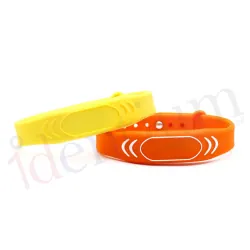
RFID Silicone Wristband
Comfortable silicone RFID wristband for events, attendance, patient ID, and cashless payments.
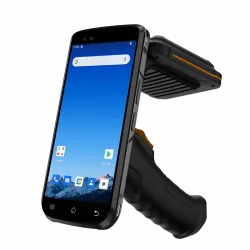
RFID Handheld Reader
Portable UHF scanners with Wi-Fi/BT connectivity for on-the-go asset verification and mobile audits.
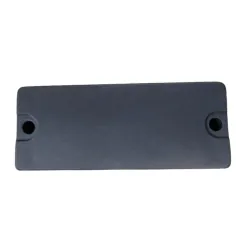
RFID Metal Tag (Encore)
Rugged UHF tag engineered for metal assets — machinery, equipment, tools, industrial asset tracking.
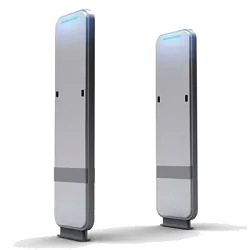
UHF RFID Gate Reader
Fixed UHF gate reader for automated entry/exit tracking at warehouse doors and checkpoints.
Use Cases
Deployed Across These Industries
Identium is trusted by organisations in manufacturing, retail, healthcare, logistics, events, and the public sector.
Hospitals · Maternity Wards · Senior Care · Dementia Units · Emergency Depts · Pharmacies · Labs & Imaging · Patient Hostels
Safer patients. Efficient hospitals.
Pilot RFID patient tracking in one ward — scale hospital-wide.
Want the full technical deep-dive? Explore Healthcare Patient Tracking on Identium One →
Related: Healthcare & Pharma · Hospitality · Education
Why patients and equipment need different frequencies
A ward deployment is really two RFID systems side by side, and a common specification mistake is forcing both onto one frequency.
Patient identity belongs at HF 13.56 MHz (ISO 14443 — Mifare, DESFire). The body is largely water, which absorbs UHF energy, so a passive UHF tag worn against the wrist behaves quite differently from the same tag sitting on a trolley. HF coupling is magnetic and short-range, so tissue troubles it far less. At the bedside that short range is the point, not a limitation: a deliberate tap answers for one band only, with no chance of the reader also picking up the next bed along.
Equipment is the opposite case. Syringe drivers, ventilators, telemetry monitors and beds have to be found across a floor, so they take passive UHF at 865–868 MHz — EPC Gen2, formally ISO/IEC 18000-63 and marketed as RAIN RFID. Much of that kit has metal bodies or metal-backed housings, which detune a plain label pressed straight onto them; specify an on-metal ABS, PC or PPS tag and fix it by rivet, cable-tie or epoxy so it survives cleaning and handling.
| What you are tracking | Frequency and standard | Tag | Typical read range — environment-dependent |
|---|---|---|---|
| Patient, newborn, staff ID | HF 13.56 MHz, ISO 14443 | Tamper-evident silicone or PVC band; PVC/PETG card | Typically a few centimetres — a deliberate tap |
| Wander and exit alerts | Passive UHF, or a band carrying both an HF and a UHF chip | Band read by a doorway portal | Typically a metre or two at a doorway; validate on a worn band, not in free air |
| Mobile equipment | Passive UHF 865–868 MHz, EPC Gen2 | On-metal ABS, PC or PPS hard tag | Typically up to ~10–15 m at a fixed portal, less on a handheld |
| High-value kit, live location | BLE 2.4 GHz | Battery-powered BLE beacon plus receiving gateways | Zone-level from signal strength; accuracy depends on gateway density and ward layout |
Two practical points. Passive UHF answers “which zone”, not “where on the floor plan” — if you need a live dot on a handful of expensive items, plan for BLE rather than for more UHF antennas. And pick band material by cleaning regime: silicone stands up to repeated wiping and disinfection and can be re-issued, while PVC suits single use on short admissions.
Bands, on-metal tags and cards are made at our New Delhi factory and tested in-house before dispatch. As of 2026 our UHF readers and antennas are WPC-approved for India’s delicensed UHF RFID band; confirm current allocations with WPC before you freeze a specification. Every reader ships with an SDK, demo app and source code, which is what the HIS or EMR integration is built against.