
We supply RFID Gates & UHF Cards for Automatic Time & Attendance, Personnel tracking for Educational Institutions, Corporates & Government Organisations
The RFID Gates come in a pair, with inbuilt TCP/IP Ethernet /RS232 / USB /WLAN communication interfaces for Scalability
The UHF Gates work along with UHF ID cards or UHF Tags Pasted on Plain PVC ID Cards is a walkthrough solution for Automatic Time & Attendance, there is no need to flashcards saving time & energy making it a very convenient process
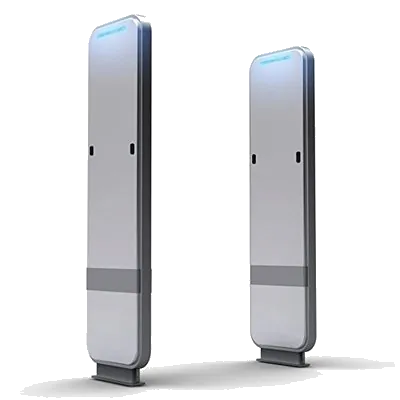
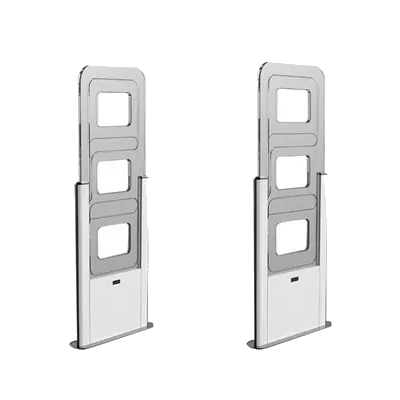
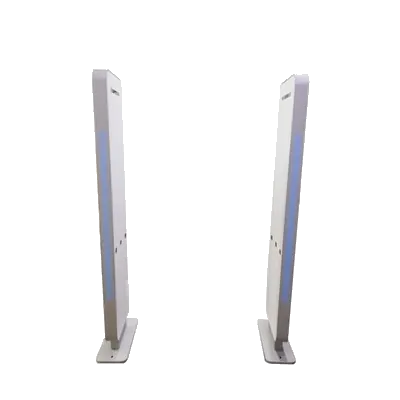
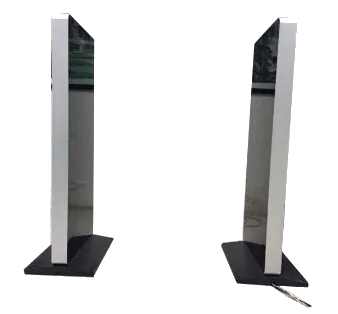
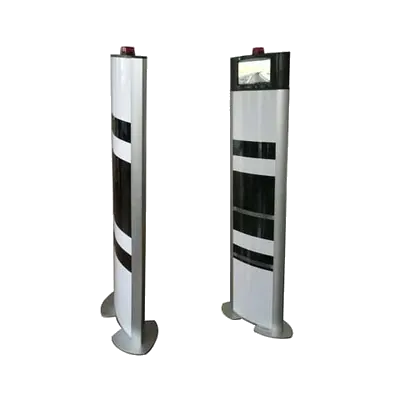
Rfid Uhf Gate Reader Provider in India
Product DetailsAbout UsRequest a QuoteProduct Images Product Details
Product Specification
| Model Name/Number | UGRA5 |
| Brand | Identium |
| Type Of Reader | RFID Reader |
| Sensor Type | Dual Sensor |
| Material | Ms + Acrylic |
| Interfaces | Weigand, TCP/IP, RS485 |
| Operating Temperature | -20 to +50 Degree Celcius |
| Power Supply | 24V SMPS Power Supply |
| Frequency | India : 865-867MHz — a datasheet tuning figure; India's licence-exempt UHF RFID allocation is 865-868 MHz under the 2021 WPC short-range-device rules, and this variant sits inside it |
| Minimum Order Quantity | 1 Pair |
**2 Port UHF Gate : Components : **
- 2 x UHF 9 dBi Antenna
- 2 Port Reader with Impinj R2000 chipset
- 2 x RF Cables
- 1 GPO Output for Alarm, Buzzer
- Inbuilt Memory and Buffer Cache to store data in case of loss of connectivity
**Software Capability: **
- Capability to Send data Directly To Cloud Server
- SDK and user Manual
4 Port UHF Gate :
Components :
- 4 x UHF 9 dBi Antenna
- 4 Port Reader with Impinj R2000 chipset
- 4 x RF Cables
- 4 Relay Input/Output. Can connect up to 4 Alarm/LED/Buzzer/Siren
- Inbuilt Memory and Buffer Cache to store data in case of loss of connectivity
Software Capability:
- Capability to Send data Directly To Cloud Server
- SDK and user Manual
About Us
We Are Manufacturing UHF RFID gates at our Facility in New Delhi, India
The Components used are imported from USA, China and Foreign Countries with Stable Performance.
We are Also a Channel partner of Impinj USA and Use Impinj Chipset in Most of our Readers for stable and Industry Leading Performance
Request a QuoteProduct Images
UHF RFID Gate Reader Components
- **UHF 9 dBi Antenna
- **UHF Fixed Reader with Impinj R2000 chipset
- **RF Cables
- **MS Metal Frame With Acrylic
- **Reading speed up to 400 tags/sec
Software Capability
- **Capability to Send data Directly To Cloud Server
- **SDK and user Manual
- **Free Cloud Push Software on Purchase of 5 units
- **Inbuilt Controller to trigger Alarm/Buzzer/Siren
Compliance
- **Approved by WPC, Ministry of Telecommunications, Govt. of India
- **BIS Approved
IDentium UHF RFID Gates
Time & Attendance
RFID Gates & UHF Cards for Automatic Time & Attendance in Schools & Education Institutions. Capability to send data directly to cloud server
Library Anti - Theft
RFID Gates, UHF Book labels for Anti Theft Tracking in Libraries. Inbuilt Relay for Alarm, Siren & Buzzer. Independent System with Inbuilt controller. Does not need Seperate PC.
Conference Tracking
RFID Gates & UHF Cards for Tracking of Movement of Delegates in & Out of Conferences, Exhibitions
Call us to Get the Latest Price and Quote
Email Us to Get the quote for Rfid Uhf Gate Reader
Designing the Read Zone at an RFID Attendance Gate
Gate attendance is one of the few RFID applications where reading less is the design goal. A walkthrough portal has to capture every credential that passes between the panels and ignore every one that does not — the person still waiting behind the line, a colleague walking past in the corridor, a tray of unissued blank cards in the security room. That constraint, rather than maximum range, is what decides how a gate is configured on site.
Passive UHF is the practical technology for this, because it reads a credential at walking pace without the wearer presenting it. HF 13.56 MHz cards (ISO 14443, the same family as NFC) typically have to be brought within a few centimetres of a reader — fine at a single office door, wrong at a shift-change gate. Active and BLE tags also read hands-free, but they suit live location across a whole site rather than one choke point, and every wearer then carries a battery. Passive UHF credentials follow EPC Gen2 (ISO/IEC 18000-63, marketed as RAIN RFID), so tags and readers from different vendors speak the same air interface; those terms describe passive UHF only, and never apply to HF, NFC or LF cards. In India, 865-868 MHz is the delicensed UHF band under WPC rules as of 2026 — our UHF readers and antennas are WPC-approved for India’s licence-exempt UHF RFID band and Identium is BIS certified, and you can confirm what a given deployment needs in the BIS and WPC compliance guide.
Typical passive UHF range at a fixed gate is up to roughly 10-15 m in clear air, but at an attendance portal you deliberately tune well below that: anything read beyond the panels becomes a false attendance record. Actual range always depends on the credential, how it is carried, the antenna mounting and what the surroundings are made of.
| Site condition | What it does to the read zone | What we usually specify |
|---|---|---|
| Card worn under a jacket, or the body between card and antenna | The human body absorbs UHF, so reads drop on the shadowed side | An antenna in each panel so one usually has a clear path; lanyards worn at chest height |
| Metal door frame, shutter or turnstile beside the panels | Reflection and detuning distort the shape of the zone | Trial mounting positions on site before fixing; keep antennas clear of the metal face |
| Glass frontage, open corridor, or a second lane close by | Stray reads from people who never walked through | Reduce the reader’s RF power and angle the antennas across the aisle rather than down it |
| Two people through on one card, or tailgating | The gate logs one read, not two people | A physical barrier or a supervised lane wherever one-person-one-entry has to be enforced; the relay output can raise an alarm or buzzer on the exception |
Credentials are encoded with the employee or student ID before issue, usually on a desktop UHF reader at the HR or admin counter, so a card leaves the desk already matched to a person. Antenna selection matters as much as reader settings when shaping the zone — gain and polarisation decide its shape, not only its reach. And it is worth being clear about what the gate produces: a record that a credential passed a point. Whether that record also opens a door, releases a turnstile or simply lands in the attendance log is a separate decision, made when the site is scoped.