

Industrial · UHF RFID · On-metal
Every Tool, Accounted For.
Lost or misplaced tools stop production, fail FOD inspections, and drain budgets. Identium’s RFID Tool Tracking attaches on-metal tags to every tool — gate readers and smart tool cribs enforce check-out/check-in, flag missing tools, and schedule calibration.
Powerful Features
Built for Scale, Precision & Speed
Lost or misplaced tools stop production, fail FOD inspections, and drain budgets. Here are the capabilities you get with Identium.
On-metal Tag Attachment
Rugged on-metal UHF labels / metal tags survive workshop conditions — heat, grease, impact.
Smart Tool Crib
Self-locking cabinet with built-in UHF reader — authorised employees badge in, cabinet tracks every check-out.
Gate-level Control
Tools not allowed to leave certain zones trigger alarms at facility gates.
Overdue Alerts
Tool not returned in time? Auto-escalate to supervisor and last-known user.
Calibration Cycles
Tools requiring periodic calibration (torque wrenches, gauges) auto-flag when due.
FOD Compliance
Critical for aviation & aerospace — pre-shift tool count, post-shift reconciliation, lost-tool alarms.
User Accountability
Every tool tied to a user while checked out — ownership-driven care.
Utilisation Analytics
Identify over-stocked tool categories and chronically scarce ones.
MRO Integration
APIs for IBM Maximo, SAP PM, and home-grown MRO platforms.
How It Works
Three-Layer RFID Architecture
A clean flow from tagging to real-time dashboards — built for operational scale.
Tag every tool
On-metal UHF labels or metal tags attached to every tool, keyed to tool master data.
Smart cribs + gates
Self-service RFID cabinets + perimeter gate readers enforce check-out discipline.
Accountable workflows
User + tool + location + timestamp logged for every movement; alerts on anomalies.
Hardware & Tags
Recommended Products
Enterprise-grade UHF/HF RFID hardware, sourced from our sister store IndiaRFIDStore.com.
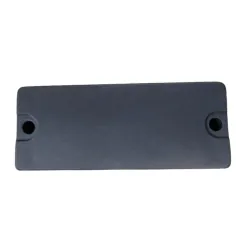
RFID Metal Tag (Encore)
Rugged UHF tag engineered for metal assets — machinery, equipment, tools, industrial asset tracking.
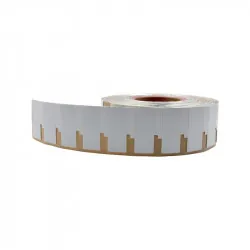
Flexible On-Metal Label 60x25
Printable flexible on-metal UHF label — perfect for IT assets, tools, and small metallic equipment.
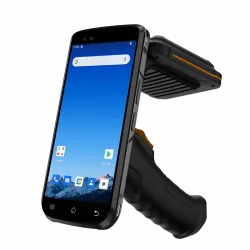
RFID Handheld Reader
Portable UHF scanners with Wi-Fi/BT connectivity for on-the-go asset verification and mobile audits.

UHF RFID Gate Reader
Fixed UHF gate reader for automated entry/exit tracking at warehouse doors and checkpoints.
Use Cases
Deployed Across These Industries
Identium is trusted by organisations in manufacturing, retail, healthcare, logistics, events, and the public sector.
Manufacturing · Aviation MRO · Automotive Service · Construction · Utilities · Workshops · Rail MRO · Shipyards
No more lost tools.
Smart tool crib pilot in 4 weeks — FOD audits without drama.
Want the full technical deep-dive? Explore Tool Tracking on Identium One →
Related: Manufacturing · Automotive · Oil & Gas
Choosing tags and readers for a crib that reads every tool
Tool tracking is a passive UHF job. In India that means the 865-868 MHz band, which WPC has delicensed for RFID — confirm the current WPC notification before you specify hardware — and EPC Gen2 tags, ISO/IEC 18000-63, marketed as RAIN RFID. It is the practical route to reading a whole returned tray of spanners in one pass rather than item by item. HF at 13.56 MHz (ISO 14443/15693) and NFC read a single item at a few centimetres, which suits the technician’s ID card at the crib door but not the reconciliation itself.
The difficulty is rarely the software. It is fixing a tag to a small, curved, oily piece of steel. On-metal tags put a spacer and ground plane between the antenna and the tool, and broadly the more antenna a tag can carry the better it reads — which is exactly what a spanner or a socket has no room for.
Matching the tag to the tool
| Tool type | Tag to consider | Why |
|---|---|---|
| Spanners, sockets, small hand tools | CR400 ceramic on-metal, 10 x 5 x 3 mm | Fits a milled pocket or a narrow flat; the sealed ceramic body takes solvent and washdown. Published range is around 2 m on a fixed reader and about 1 m on a handheld, measured on a clean metal surface — inside a loaded steel drawer expect less |
| Torque wrenches, gauges, power tools | MNTH3 or UMT60 UHF rugged on-metal tags | A larger body carries more antenna, so it generally reads further than a miniature ceramic tag on the same shelf, and leaves room for a laser-marked calibration serial |
| Tool boxes, trays, shadow boards, trolleys | Flexible printable on-metal label, 60 x 25 mm | Carries a printed kit ID and a barcode fallback, so the parent kit stays identifiable if a child tag fails |
Attachment decides whether a tag survives its second year. Adhesive alone struggles on hot, oily or vibrating surfaces, so we supply the same tags for riveting or cable-tie mounting, with epoxy potting or ultrasonic welding where the environment is harsher still, and a human-readable serial laser-marked on the body. Encoding and serial numbering happen at our Delhi factory and units are tested in-house before dispatch, so tools arrive ready to enrol rather than being programmed one by one at the crib.
On the reader side, turn the power down inside a steel cabinet. A loaded drawer can behave like a small resonant box, and an over-powered antenna will read the next bay, reporting tools as present that are not. Several low-power shelf antennas polled zone by zone usually beat one strong antenna. The crib and the perimeter also answer different questions: the cabinet knows who took what, while a gate portal reading in sequence tells you a tool actually crossed the line rather than sitting near it — and a handheld covers the floor sweep when something goes missing mid-shift.