
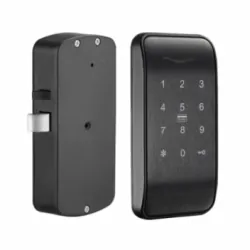
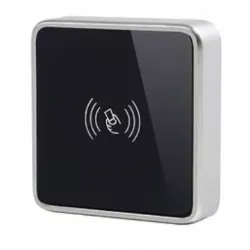
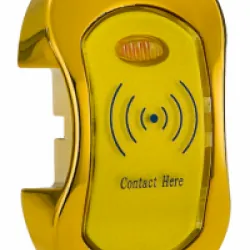
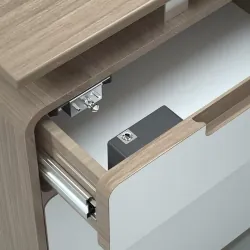
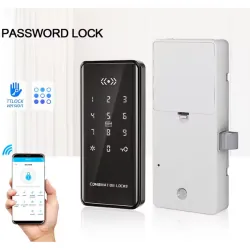
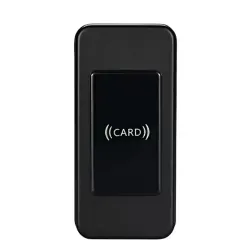
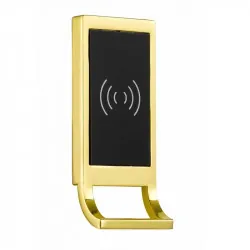
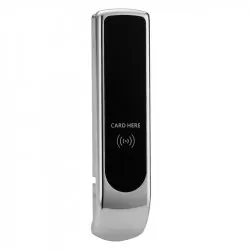
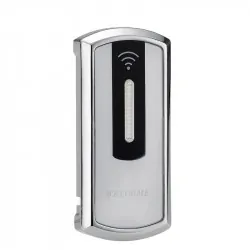
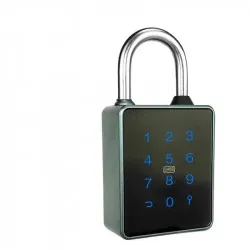
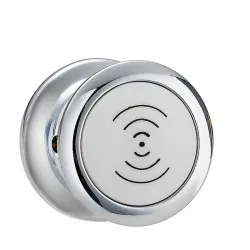
RFID Locker locks are an ideal solution for keyless access to Cabinets, Storage Lockers, Gym Lockers, WaterPark Lockers
RFID Cabinet Locks can be programmed to work with RFID Wristbands, keyfobs & RFID Access Cards
RFID Locker Systems are simple to use and can be programmed and setup under 5 minutes!
**Working Modes: **
A) Private Use – each user has their own lock that is synced to their user card or wristband that will only work with that specific lock.
Note: this is the default factory setting.
B) Public Use – used for short term, multi user applications. Any card/wristband will work with any available lock.
Note: when locked in public mode a red light will flash every 5 seconds to indicate the locker is in use
Features:
- Card Type: ID, MIFARE, TIMIC
- User can set locking doors using whether single card or double cards. ID makes use of electromagnetic wave tech. The induction is more sensitive and the distance is less than 3cm.
- Power Supply: DC6V, 4 pieces of 5# alkaline batteries can be used for more than 1 year. Attached power supply head is prepared.
- The main chip of circuit board is the US. Texas Instrument TI Chip, the power consumption of which is low. Static Current: 5-10uA, Card Reading Current: 20mA, Lock Opening Current: about 300mA(last for 0.3s). work settings: temperature:-20°C~+70°C, humidity: 95%RH
- Lack of voltage indication: when the voltage is less than 4.8V, the lock will give a indication and the red LED will light. At the same time, you can still open the lock for more than 50 times
- Specialties: Using the cards to open the door. The door will open automatically. Handle is not needed. You can use mechanical equipment to open the door for emergencies. Combined gears movement to ensure the safety and the reliability. Watch band type cards are worn for convenience. It prevents from water, humidity, high temperature, tampering and erosion.
- System Settings: a front lock body, a core of lock, a door holder module, door open cards.
Application:
- Hotels
- Sauna centres
- Office cabinet doors
- Swimming Pools
- College/School Staff rooms, Personal Lockers
- Gym Lockers
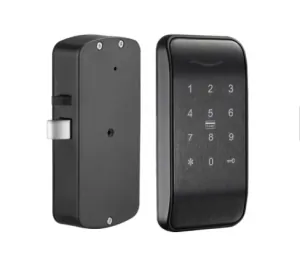
- Main Application: Gym & Office
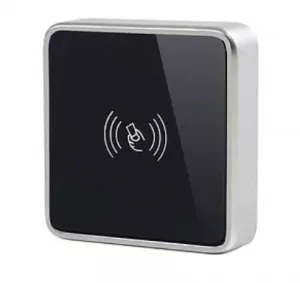
- Model : ID – RP – 01
- Material : Zinc Alloy + ABS
- Working Mode : RFID, Password, RFID + Password
- Frequency : 125 kHZ, 13.56 MHz
- Main Application: Offices, Clubs, Hotels, Sauna
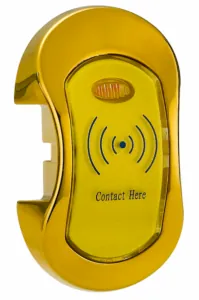
- Model : ID – BL – 01
- Material : Zinc Alloy + ABS
- Working Mode : RFID, Bluetooth
- Frequency : 13.56 MHz
- Main Application: Amusement Park
- Model : ID – CL – 01
- Material : Zinc Alloy + ABS
- Working Mode : RFID
- Frequency : 125 kHZ, 13.56 MHz
Download RFID Cabinet Lock Datasheet
Write to us for more information
Choosing between the three models, and what the spec means on a real locker bank
A locker lock is deliberately a near-field device. These locks work on HF 13.56 MHz — the ISO/IEC 14443 band — and on LF 125 kHz proximity cards, and the spec lists the card types accepted as ID, Mifare and TIMIC. Presentation distance for the ID card type is quoted at under 3 cm, and in practice it is typically less once a thick door or a card left in a wallet sits in the way. That short budget is the design intent: a credential readable across metres would be answering neighbouring doors as well as its own. Passive UHF (EPC Gen2 / ISO/IEC 18000-63, marketed as RAIN RFID) is the wrong radio for doors set this close together, whatever the rest of your site runs on.
Two specification lines decide the model before anything else does: the working mode you want, and the frequency of the cards already in circulation.
| ID – RP – 01 | ID – BL – 01 | ID – CL – 01 | |
|---|---|---|---|
| Working mode | RFID, password, RFID + password | RFID, Bluetooth | RFID only |
| Frequency | 125 kHz and 13.56 MHz | 13.56 MHz only | 125 kHz and 13.56 MHz |
| Stated main application | Gym and office | Offices, clubs, hotels, sauna | Amusement park |
| Pick it when | You want a keypad fallback for forgotten cards | Phone opening matters and credentials are already 13.56 MHz | Highest-churn public-mode banks, nothing to forget |
Note what that table forces: if your estate runs 125 kHz proximity cards, the Bluetooth model is out, because it is listed at 13.56 MHz only. And “13.56 MHz” on its own is not a compatibility answer — Mifare Classic, DESFire, ISO 15693 and NFC Forum chips all share that frequency and answer differently, so quote the chip family and have it confirmed against the specific model.
Battery planning follows the current figures rather than the headline life. Standby draws 5–10 µA, a card read about 20 mA, and the opening pulse about 300 mA for 0.3 s — so what empties the cells is how often each locker is opened, not how long it sits idle. A public-mode gym bank turning over all day and an office cabinet opened occasionally are two different maintenance intervals; budget them separately.
Two things that catch buyers out:
- The red LED means two different things. It flashes every 5 seconds to show a public-mode locker is in use, and it also lights when voltage falls below 4.8 V. Brief whoever walks the bank, or they will read “occupied” as “flat”. The low-voltage warning leaves a working margin by design, so treat it as a planning signal rather than a failure.
- The door is a separate question from the spec sheet. The lock is a front body, a core and a door holder module, and the door opens itself without a handle — so check clearance in front of the bank and that nothing fouls the swing. On wet sites, read the environmental line closely: it quotes a temperature and humidity range and general resistance to water and humidity, but no IP ingress rating, so wash-down or spray exposure is worth raising explicitly in the enquiry.
Worth settling before you enquire: openings per locker per day, and whether you want one card or two enrolled per door — the lock can be set either way, and it changes how many credentials you order.
Related reading
- Deciding the frequency across a whole site, not just the lockers? Work through choosing between UHF, HF and NFC cards for access and ID.
- Pools, waterparks and gyms usually issue the other credential these locks accept — see the RFID wristbands we manufacture.
- Need a record of who opened what? Standalone locker locks keep none, so the audit layer belongs at the entrance with RFID access control and biometrics.