

Enterprise · UHF RFID
Every File, Findable in Seconds.
Legal practice, banking, hospitals, government offices — every critical file matters. Identium’s RFID File Tracking tags each file jacket with a UHF label and tracks it through shelves, desks, and meeting rooms. Lost files become impossible.
Built for Scale, Precision & Speed
Legal practice, banking, hospitals, government offices — every critical file matters. Here are the capabilities you get with Identium.
Instant File Location
Search a case number or file ID — see exactly which shelf, desk, or room it’s currently on.
Audit Trail
Every file access logged: who took it, when, where it went, when returned.
Room-level Zones
Portal readers at doorways track when files enter or leave each room.
Missing File Alerts
File not returned on time? Automated reminders to the last known holder.
File Jacket Tags
Slim UHF labels adhered to file jackets — compatible with existing filing systems.
Access Compliance
Sensitive files raise alerts if accessed by unauthorised personnel.
Archive Management
Cold-storage rooms with bulk readers for annual audits without pulling boxes.
Case Management Hooks
APIs for LegalTech, CBS (core banking), EMR (hospital), and government file platforms.
Utilisation Reports
Which files get accessed, by whom, how often — insights for retention policies.
Three-Layer RFID Architecture
A clean flow from tagging to real-time dashboards — built for operational scale.
Tag every file
A thin UHF label on every file jacket, encoded with the file ID in your system.
Readers everywhere
Shelf antennas, doorway gates, and handhelds ensure complete room-level visibility.
Instant lookup
Users search a file ID; system returns last known location + full audit trail.
Recommended Products
Enterprise-grade UHF/HF RFID hardware, sourced from our sister store IndiaRFIDStore.com.

UHF RFID Label (H10)
High-performance UHF label for non-metallic items — cartons, books, plastic cases, inventory labelling.
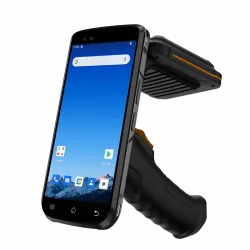
RFID Handheld Reader
Portable UHF scanners with Wi-Fi/BT connectivity for on-the-go asset verification and mobile audits.
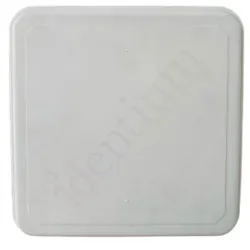
UHF RFID Antenna
Circular-polarised 9dBi/12dBi UHF antennas — extend reader range and multi-port coverage.
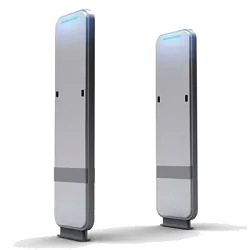
UHF RFID Gate Reader
Fixed UHF gate reader for automated entry/exit tracking at warehouse doors and checkpoints.
Deployed Across These Industries
Identium is trusted by organisations in manufacturing, retail, healthcare, logistics, events, and the public sector.
Law Firms · Banks · Hospital Records · Government Offices · Corporate HR · Archives · Insurance · University Records
Stop losing files.
Pilot RFID file tracking on one department — scale across the organisation.
Want the full technical deep-dive? Explore File Tracking on Identium One →
Related: Defence Logistics · Healthcare & Pharma · Education
Specifying a File Tracking System: Frequency, Tag Placement and Read Control
File and document tracking is a passive UHF application. In India that means the 865–868 MHz band — which, as of 2026, the WPC keeps delicensed for low-power RFID; the BIS and WPC compliance guide covers the current position — and EPC Gen2 (ISO/IEC 18000-63) tags, marketed as RAIN RFID. The reason is distance and bulk: auditing a records room means sweeping a whole rack of file jackets in a pass rather than handling each one, and a handheld should pick a file out at a working distance rather than by touch. HF at 13.56 MHz and NFC read at very short range — centimetres, by design — which is right for the staff card tapped at the issue counter, but not for finding a file on a shelf you are standing away from.
Two physical constraints decide how a records room actually performs. A thick block of paper absorbs UHF energy, more so when it is damp, so the label belongs on the outer face of the jacket near the spine, never sandwiched inside the file. And when jackets are shelved spine to spine, identically placed tags sit directly on top of one another and couple, which pulls reads down; staggering label position across a few fixed offsets within a batch stops adjacent tags from stacking.
| Where the file lives | Suitable tag | Why |
|---|---|---|
| Card or board jackets on wooden or plastic shelving | Thin UHF label, such as the H10 label above | Low profile, and prints and encodes in one pass on an RFID label printer |
| Files in steel almirahs or metal racks | On-metal UHF tag, or a label lifted off the surface by a foam spacer | Flat labels detune badly against steel |
| Archive cartons in long-term storage | A carton-level label as well as the file-level labels inside | An audit can reconcile carton counts first and open a box only where the two disagree |
| Bound registers and thick ledgers | Label on the outer cover, not an inner page | Keeps the paper block out of the signal path |
Read control matters as much as read range. A doorway portal at full power will happily read the rack standing behind it, so plan for tuned transmit power, circular-polarised antennas aimed across the opening rather than into the room, and an RSSI threshold before a movement is logged as a real event. At the issue counter, a confined read zone — a lower-gain antenna, or a desktop reader — keeps the system from claiming files that are merely nearby. What range you actually get depends on the jacket, the shelving and the antenna layout, so a short site trial on your own files and racking before rollout is worth the time.
One point specific to legal and banking records: encode an opaque serial into EPC memory and resolve it to the case or account number in your own database. Gen2 memory can be password-locked against rewriting, but the EPC a tag broadcasts is readable by any compliant reader that comes in range, so it should never carry the file’s actual identity.