

RTLS · 2.4 GHz Active RFID · BLE 5.0
Real-Time Location with Active RFID
Identium’s Active RFID Tracking delivers real-time location data for high-value assets, personnel, and vehicles — with read ranges up to 100 meters, zone mapping, geo-fence alerts, and movement history.
Explore in depth → · Request Quote
Dual-Technology Platform
One unified portal, two complementary technologies. Choose 2.4GHz Active RFID for long range and heavy-duty assets, or BLE 5.0 for compact battery-efficient tags.
2.4GHz Active RFID
Long-range active RFID with up to 100m reader-to-tag distance. Ideal for wide-area coverage, outdoor yards, warehouses, and industrial zones.
- Range: up to 100m
- Battery: 3–5 years
- Update rate: sub-second
- Accuracy: zone-level
BLE 5.0 Beacons
Ultra-compact Bluetooth Low Energy beacons for personnel badges, small asset tags, and dense-deployment scenarios. Gateway-based aggregation.
- Range: up to 30m
- Battery: 2+ years
- Form factor: coin-cell
- Accuracy: sub-metre (with AoA anchors)
Powerful Portal Features
Everything you need to deploy, monitor, and scale real-time location tracking across any facility.
Live Radar Display
Real-time polar radar visualisation with RSSI-based distance and antenna-based angular positioning.
Indoor Floor Maps
Custom floor-plan overlays with live tag positioning across zones. Visualise entire facilities at a glance.
Geo-Fence Alerts
Instant notifications when tags enter or leave defined zones. Perfect for asset security and safety compliance.
Full History & Analytics
Paginated detection history with search, export, and analytics. Audit-ready records for compliance.
Tag Registration
Register tags with asset names, categories, and custom metadata. Bulk import and QR-based mapping.
Multi-Reader Support
Add unlimited readers across multiple TCP ports. Status monitoring, heartbeat tracking, and auto-reconnect.
Auto-Refresh & WebSocket
Sub-second live updates via WebSocket. Auto-refresh every 30s, plus manual refresh controls.
Fully Responsive
Works on desktop, tablet, and mobile. Full-screen modes for radar and floor plans on large displays.
Secure by Default
Session-based login with role management. All APIs require authentication. Data isolated per account.
How It Works
From tag broadcast to dashboard update in under one second. Simple architecture, reliable performance.
Tag Broadcasts
Active tags transmit their unique ID and status flags every few seconds over 2.4GHz or BLE.
Reader Receives
Readers capture tag signals across up to 4 antennas and measure RSSI for distance estimation.
Server Processes
The Identium backend parses detections, stores history, and broadcasts updates via WebSocket.
Dashboard Updates
The dashboard renders every detection on radar, floor map, and feed in real time.
Compatible Hardware
Source hardware directly from India RFID Store — all products below are compatible with the Identium Active Reader platform.
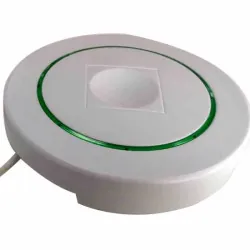
Active Reader F530
Multi-antenna 2.4GHz active reader — up to 4 antenna ports, 100m+ range per antenna, TCP/IP with heartbeat and detection reports.
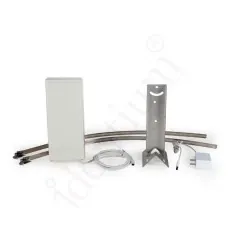
Active Reader F529
Long-range 2.4GHz active RFID reader for wide-area, gate and yard coverage.
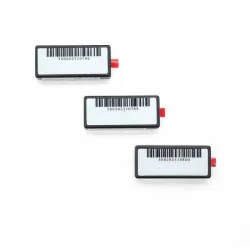
Active Tag AT508
Compact active tag with 3–5 year battery. Broadcasts unique ID with RSSI, entry/exit and alarm flags on a configurable interval.
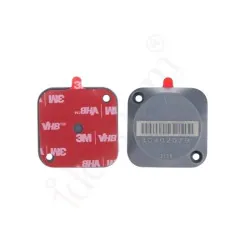
Rugged Active Tag AT507
Heavy-duty active tag for vehicles, containers and outdoor equipment.
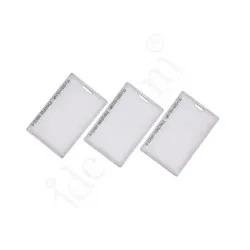
Active Card T505
Card-format active tag for personnel badges and access-linked tracking.
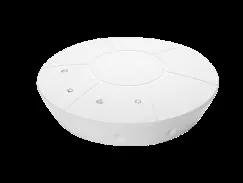
BLE Gateway ID-BGW-02
Ethernet/Wi-Fi/4G gateway — scans 300+ Bluetooth devices per second, PoE powered, UDP/TCP/MQTT output.
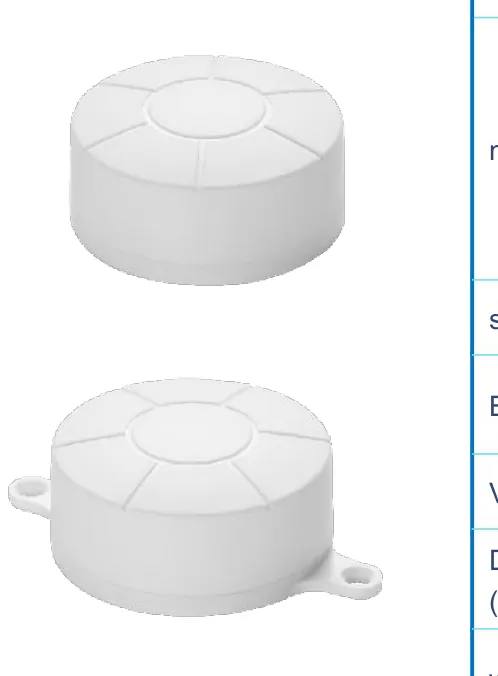
BLE Beacon Family (18 models)
Asset tags, industrial beacons, pallet bar tags, work cards, bracelets and SOS fobs — iBeacon and Eddystone, configurable via the Identium Connect app.
For sub-metre indoor positioning, the ID-AOA-GW25 Bluetooth AoA anchor (0.1–1 m accuracy, PoE, ceiling or side mount) works with the same AoA-capable beacons — pilot with RSSI zoning, upgrade to AoA without re-tagging.
Datasheets: BLE & AoA Product Catalogue · ID-BLE-T01 Asset Tag · ID-BLE-T03 Round Beacon · ID-BLE-T08 Pallet Beacon
Built for Any Facility
Deployed in hospitals, warehouses, factories, and campuses across India. One platform, endless applications.
- Hospitals & Healthcare — track medical equipment, patients, and staff. Wander alerts, infant security, and instant equipment location.
- Warehouses & Logistics — locate forklifts, pallets, and inventory. Monitor dock door activity and yard truck movements.
- Manufacturing — WIP tracking, tool location, and worker safety zones. Integrate with MES and ERP systems.
- Campuses & Schools — student attendance automation, visitor tracking, and asset management across multiple buildings.
- Corporate Offices — laptop and equipment tracking, meeting-room occupancy, and visitor management.
- Ports & Yards — container tracking, vehicle location, and perimeter security across large outdoor areas.
Need real-time asset visibility?
Identium’s RTLS pilots go live in 4 weeks. Let’s plan yours.
Contact Sales · Explore the live platform on Identium One →
Related: Manufacturing · Oil & Gas · Healthcare & Pharma