

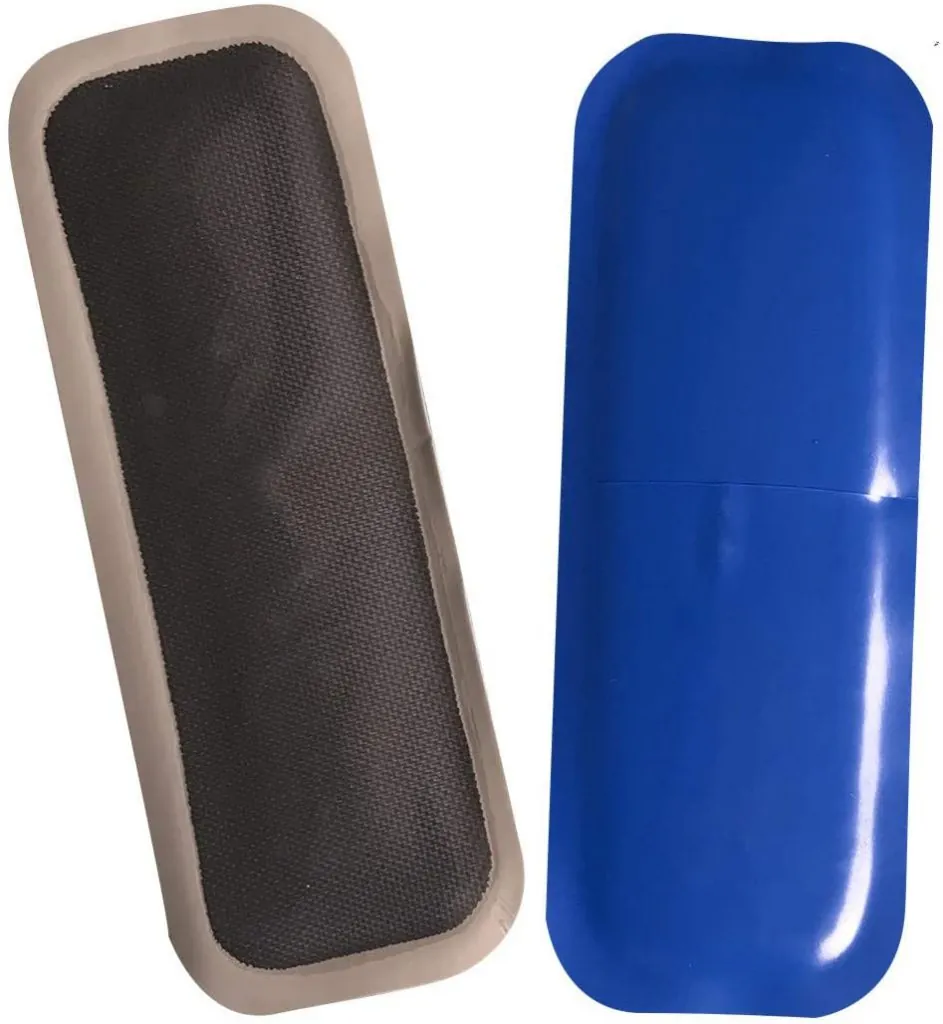
RFID gives tyre makers and fleet operators something a barcode never can: every tyre carries a unique, machine-readable identity that survives the factory floor and the road. Identium supplies UHF tyre tags and readers for tyre manufacturing, distribution and fleet management in India.
Where RFID fits in the tyre lifecycle
- Work-in-progress tracking — identify each unit as it moves between building, curing and inspection, so the stage and history of every tyre is visible. See Manufacturing & WIP.
- Finished goods and dispatch — read entire stillages of tyres at the dock door without line-of-sight, and verify that the right SKUs leave on the right truck.
- Warranty and anti-counterfeit — a serialised tyre ID links each unit to its production batch for claims, recalls and grey-market checks.
- Fleet and retread management — record mounted position, rotations, tread inspections and retread cycles against each tyre’s history.
- Mould and tooling identification — heat-resistant tags keep curing moulds and fixtures on the maintenance register.
Tags and readers built for tyres
Our UHF tyre tag (model UTTR6, 95 × 35 × 2 mm) mounts on the inside of the tyre and reads at up to 3 m — see rugged RFID tags for specifications. At gates, conveyors and dock doors we deploy fixed UHF readers, with handheld readers for yard counts and inspections.
Recommended Identium hardware
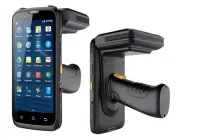
- CX1500N handheld RFID reader — Android handheld for yard counts, dispatch checks and tread-inspection rounds.
- IHZ4 4-port fixed reader — conveyor and line-side reading across building, curing and inspection stages.
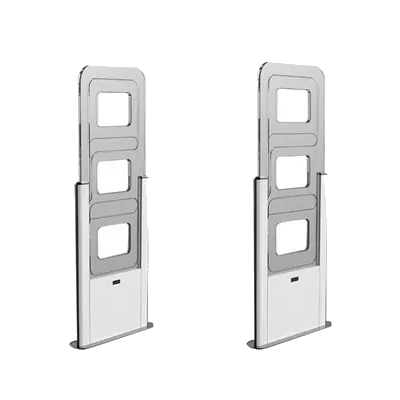
- UHF gate reader HLR200 — dock-door portal that reads full stillages on the move.
- CR400 ceramic on-metal tag — high-temperature ceramic tag for curing moulds and metal tooling.
Related solutions
- RFID warehouse management
- RFID inventory management
- RFID tool tracking for moulds and fixtures
- RFID asset tracking
Also see RFID for automotive. Ready to serialise your production? Talk to our team to discuss a pilot for your plant.
Making tyre RFID read reliably on a real plant floor
The frequency, and why. Tyre tracking is a passive UHF job. In India that means the 865-868 MHz band, which WPC has kept delicensed for RFID — the position as of 2026, though it is worth checking the current WPC notification before you freeze a specification — using EPC Gen2 / ISO/IEC 18000-63, the passive-UHF protocol marketed as RAIN RFID. Tyres have to be identified in bulk, at a distance, while they move on a conveyor or sit stacked on a stillage, which rules out HF 13.56 MHz and NFC, where the read range is a matter of centimetres. Identium’s UHF readers and antennas are WPC-approved for the Indian band, and every reader ships with an SDK, demo app and source code, so your MES or WMS team can pull reads straight into the systems you already run.
Rubber is the hard part. Carbon-black-loaded rubber absorbs RF, and steel belts and bead bundles behave like a partial ground plane. That is why a tyre tag is specified for a shorter range than a rugged pallet tag of comparable size. Treat every range figure — ours included — as typical rather than guaranteed: it moves with tag position, antenna gain, reader power, orientation and how the tyres are stacked. Two practical consequences. Tell us at which stage the tag goes on, into the green tyre before vulcanisation or onto the cured inner liner, because it changes which tag body we specify. And read stacks side-on rather than from overhead, since tyres on top tend to shield the ones below.
What to tag, and with what
| Item | Suitable tag | Notes |
|---|---|---|
| Cured tyre, inner liner | UTTR6 UHF tyre tag | Thin profile for inner-liner mounting; confirm the mounting stage with us before ordering |
| Curing mould, container, segment | CR400 ceramic on-metal tag, 10 x 5 x 3 mm, IP68 | Rated -40 to +100 deg C — check that against the actual temperature at your chosen mounting point, not the mould’s peak |
| Steel stillage, rack, trolley | Metal-mount rugged tag (UMMGT or UMT60 class) | Steel needs a metal-mount design; a plain label will not read on it, and the larger tag body generally buys more range for yard and dock passes |
| Plastic crate, bin or pallet | Rugged pallet-class tag (UMT12 class) | Tell us the surface material — a tag specified for plastic and one specified for steel are not interchangeable |
Encode at source. Where the chip offers user memory, batch, mould number and build date can be written alongside the EPC, so a handheld identifies a tyre in a yard or a dealer’s store even when it is off-network. We laser-mark, print, encode and serialise to your numbering scheme before dispatch, and units are tested in-house before they leave Delhi.