
An RFID tyre tag gives each tyre its own UHF identity, so it can be traced from warehouse to dealer, retreader and fleet depot. Identium, an RFID manufacturer in New Delhi, offers RFID tyre tags in India in four bodies: the IDTS-TT10, a tyre patch RFID tag made of tyre rubber; the UTTR6 inner-liner tag; and two flexible stock tags, the ID-9050-U8 and ID-1993-H9. For plant-wide tracking from building to dispatch, see RFID for tyre manufacturing.
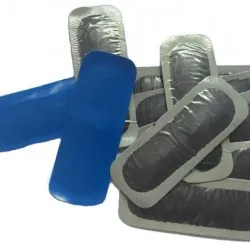
Identium tyre tags compared
| Model | Body and fixing | Chip (as listed) | Read range (as specified) | Use |
|---|---|---|---|---|
| IDTS-TT10 | 130 × 85 × 3.5 mm rubber patch; adhesive | Higgs 3/4 or Monza 4/4QT | Reader dependent | Fleet tyres in service |
| UTTR6 | 95 × 35 × 2 mm; inner liner | On enquiry | Up to 3 m | Finished tyres, post-cure |
| ID-9050-U8 | 90 × 50 mm; flexible | NXP UCODE 8/9 family | Up to 8 m | Dealer, retreader, depot stock |
| ID-1993-H9 | Flexible; non-metal surfaces | H9 | Up to 6 m | Tyres in stock, pallets |
The three store SKUs list EPC Class 1 Gen 2 and ISO 18000-6C; that ISO air interface is now numbered ISO/IEC 18000-63. Their frequency figures, 840–960 or 860–960 MHz, are chip tuning spans, not licences. Memory and ratings are covered per model below.
IDTS-TT10 rubber patch tag for tyres in service
The IDTS-TT10 is a tyre-rubber patch fixed with adhesive. A fleet or tyre business uses its serial number to follow one tyre on a car, bus, truck or motorcycle through its working life. Its IP68 and −40 to +85 °C (operating and storage) are listing specifications, not process ratings.
The listing offers four chip options and gives 512 bits with password-protected user memory; confirm the chip and the user-memory size for the chip supplied on the order. Tags can carry your logo, colour and serial number, and a tamper-evident option adds slits to the label and adhesive layers. The listing does not say where on the tyre the patch sits or which adhesive it uses, so agree both with us for your tyre type.
UTTR6 inner-liner tag
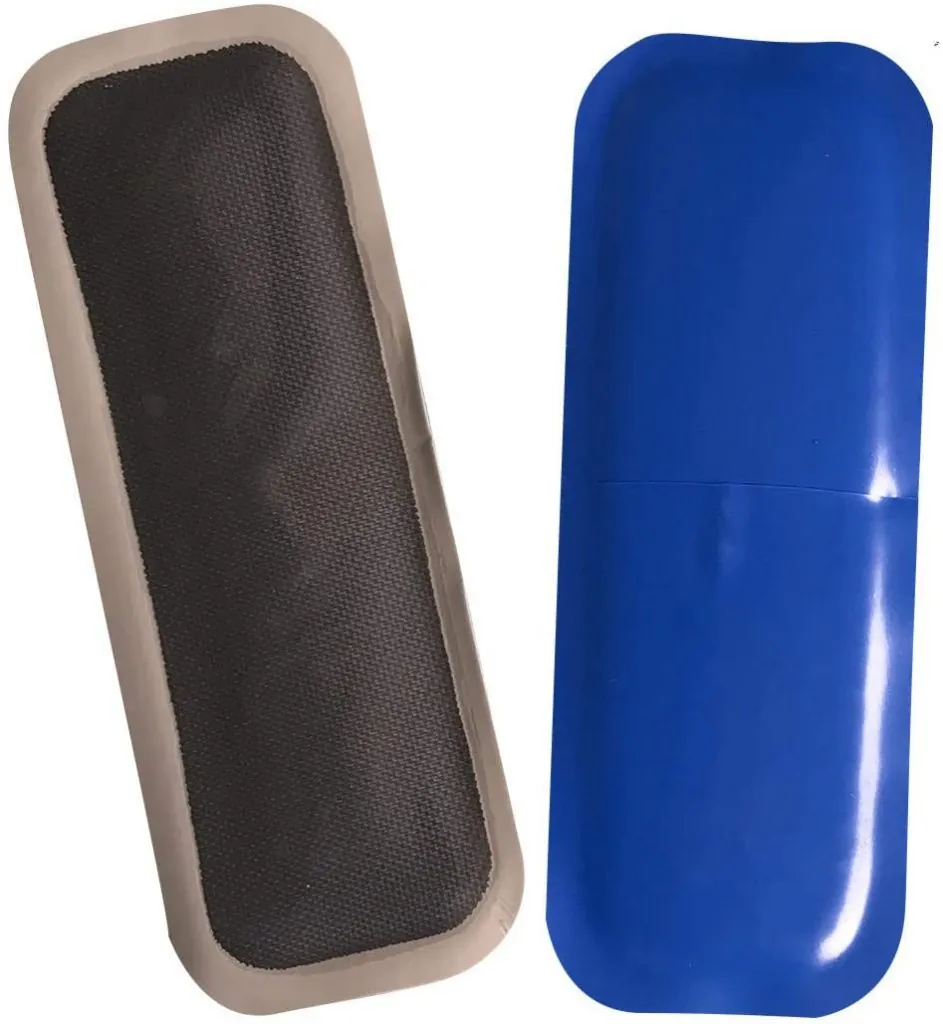
The UTTR6 is a 95 × 35 × 2 mm thin body for the inside of the tyre, read at up to 3 m depending on the reader. Its datasheet carries no cure-cycle rating, so assume it goes onto the cured inner liner unless otherwise agreed in writing. Curing and back-tagging detail is on the tyre manufacturing solution page. For other harsh-environment tag bodies, see rugged RFID tags.
Flexible tags for tyre stock, dealers and depots
Both are thin, flexible tags; their listings name standard UHF RFID readers and printers as compatible, so they can be encoded on a UHF RFID printer.
- ID-9050-U8: an NXP UCODE 8, 9, 9xe or 9xm chip, listed for warehouses, dealers, retreaders and fleet depots. EPC size depends on the chip supplied; confirm it on the order. Its listed size (90 × 50 mm) differs from the UTTR6’s 95 × 35 × 2 mm, and its listing gives no mounting position, so agree one with us.
- ID-1993-H9: one part number for tyres held in stock, pallets and windscreens, on non-metal surfaces. Treat it as a stock tag, not a tag for fitted steel-belted tyres in service. For dedicated windscreen tags, see RFID windshield tags.
Which tag at which stage
- Finished tyres, post-cure: the UTTR6 inside the tyre, or the IDTS-TT10 patch.
- Back-tagging warehouse stock: clean the inner liner and apply the UTTR6 by the bonding method agreed with us, with no change to the production line.
- Dealer and retreader stock: the ID-9050-U8, or the ID-1993-H9 for tyres held in stock.
- Fleet retrofit: the IDTS-TT10. To identify the vehicle itself, see RFID vehicle tracking; vehicle plants should also read RFID for automotive.
- Retreading: no tag here is rated for buffing or curing, so treat each retread as a re-link event: read or replace the tag and update the software record.
- Green tyres: building a tag in before vulcanisation is a separate engineering exercise, specified against your press. ISO 20909:2019 covers three tyre-tag technologies (embedded, patch and sticker); the India RFID Store guide to ISO 20909 tyre tags compares them. None of the tags on this page is offered as conforming to ISO 20909. Curing moulds are tagged as assets rather than tyres; see high-temperature RFID tags.
Rubber, steel belts and real read range
Rubber and steel belts detune a tag, as the tyre manufacturing page explains, so the same tag reads at a shorter range on a tyre than in free air or on a wooden pallet. No specification here says whether its range was measured in free air or on a tyre, so treat the table’s ranges as ceilings, not site results. Raising reader power does not rescue a tag detuned by metal; see why ordinary labels fail on metal.
Trial reads on a full stack in your real storage orientation, since tyres above and beside a tag can shield it. To turn a datasheet range into a test on your own tyres, see how to read tag sensitivity in dBm.
What to write to the tag
Every tyre must carry exactly one EPC. Either take tags pre-encoded in a reserved serial range or encode at application, and keep a register of issued ranges.
Batch, mould and build-date data can sit beside the EPC only where the tag lists user memory. Of these four, only the IDTS-TT10 lists it (512 bits; confirm the size for the chip supplied). The ID-9050-U8 listing states none, but NXP’s UCODE 9xm, one of its listed chip options, has user memory; if you need on-tag data, specify that chip in writing. Otherwise, keep that data in software against the EPC.
For US-bound tyres, the DOT Tire Identification Number can be mirrored as data: 13 symbols for a new tyre (3-symbol plant code, 6-symbol manufacturer’s code, 4-digit week-and-year date code), or 7 for a retreader. Tyres from plants with older two-symbol codes, made before 13 April 2025, may carry the earlier, shorter format. 49 CFR 574.5 requires the TIN to be marked on a sidewall and does not mention RFID. Encode the EPC, verify it with a read-back and then lock it; the India RFID Store tyre-tag guide covers EPC encoding and locking.
Reading tyres in the yard and at the dock
- CX1500N handheld reader: UHF handheld for yard counts, inspections and dispatch checks.
- IHZ4 four-port fixed reader: four antenna ports for dock doors, gates and conveyors, with RSSI reporting and data filtering to contain the read zone.
- HLR200 walk-through gate reader: two-way In/Out sensing, up to 4 m across the portal (typical and environment-dependent).
Approvals sit with the readers: passive tyre tags have no transmitter and need no WPC approval or BIS registration. Readers use India’s licence-exempt 865–868 MHz band under G.S.R. 853(E) of 2021. Identium is a BIS and WPC approved RFID manufacturer.
Choosing and ordering
Tyre tags are quoted against specification. Send the tyre type and size class, mounting stage and surface, read points, numbering scheme and quantity. Custom tag orders typically turn around in 5–10 days, and tags can be supplied encoded and serialised to that scheme. Ask for each SKU’s material-compliance declaration in writing.
To discuss a specification, contact Identium.