

We provide RFID solutions for the IT industry, along with device selection and integration support for domain-specific applications. For IT teams and systems integrators, Identium works as a hardware-plus-knowledge partner: we transfer the know-how needed to integrate data-capturing devices — barcode readers, RFID readers, RFID printers, biometric devices and GPS/GPRS devices — as well as the consumables they run on.
We extend support to build adaptors that connect data-capturing devices to enterprise-level applications, and we advise on middleware requirements for enterprise-scale deployments. For industrial environments, we bring state-of-the-art workflow automation technologies and integration support for auto-ID devices, including RF survey reports for complex wireless and RFID deployments where metallic interference is a challenge.
Where RFID fits in the IT industry
- IT asset tracking — laptops, servers, switches and storage arrays carry slim on-metal RFID labels, turning physical audits from a multi-week exercise into a walk down the rack aisle.
- Data-centre and office audits — a handheld sweep reconciles deployed hardware against the asset register, flagging moved or missing equipment immediately.
- Device integration projects — we help your developers wire barcode, RFID, biometric and GPS/GPRS data capture into the enterprise applications you build for clients.
- Middleware and architecture advice — guidance on the middleware layer that buffers readers from ERP and asset-management software in large rollouts.
- RF site surveys — survey reports for wireless and RFID deployments in metal-heavy industrial environments, before a single reader is mounted.
- Document and media control — tagged files, backup media and equipment trace movements between secure zones.
Recommended Identium hardware
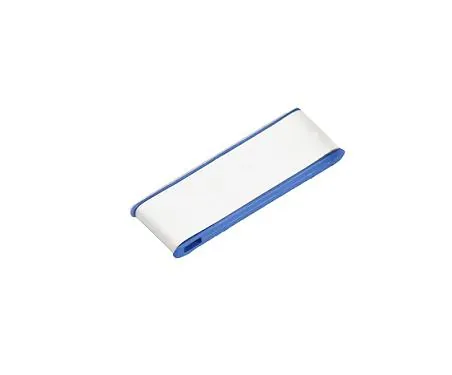
- RFID asset tracking tags — printable on-metal labels and hard tags sized for IT equipment.
- CX1500N handheld RFID reader — Android handheld for fast floor-by-floor IT asset audits.
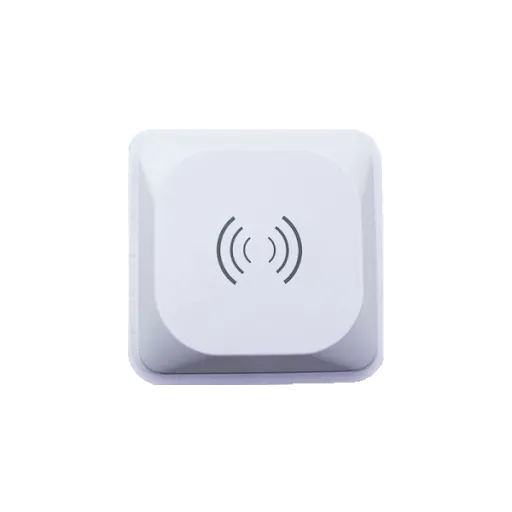
- IHZ4 4-port fixed reader — monitors server-room doorways and storage cages through multiple antennas.
- UHF desktop readers — encode and issue tags right at the IT service desk.
Related solutions
- RFID asset tracking
- RFID file tracking
- RFID software and integration
- RFID access control with biometrics
Whether you need a reader SDK evaluated, an RF survey for a tricky site, or tags for ten thousand laptops, talk to our team and we will scope it with you.
Tagging an IT estate: placement, read zones and encoding
For IT asset audits the technology that fits is passive UHF on 865-868 MHz, the band that as of 2026 is delicensed for RFID in India under WPC rules — worth confirming the current WPC and BIS position before you commit to hardware. These tags follow EPC Gen2 (ISO/IEC 18000-63), the standard marketed as RAIN RFID, and it is the only common RFID family that reads a whole rack or storeroom in one sweep without line of sight. HF at 13.56 MHz still belongs in the picture, doing a different job: the ISO 14443 card that opens the server-room door is a separate system from the UHF tags you count — HF is not EPC Gen2, and the two should be specified separately. Identium’s UHF readers and antennas are WPC-approved for the Indian band, and the company is BIS certified.
In a data centre the usual difficulty is too much range, not too little. Passive UHF with a fixed reader is typically quoted at around ten to fifteen metres in clear air, and in a rack aisle that means a reader will cheerfully pick up tags several bays away — the count comes out right and the location comes out wrong. Reduce transmit power, aim directional antennas down the aisle rather than across it, and rank reads by RSSI. For bay-level accuracy, a handheld run at reduced power and walked rack by rack usually beats a larger portal.
| Asset | Surface | Tag to use | Fixing |
|---|---|---|---|
| Laptops, tablets | aluminium shell | small on-metal ABS or PCB tag | adhesive, clear of vents |
| Servers, switches, storage arrays | steel chassis | slim on-metal label or PCB tag | adhesive on bezel or rack ear |
| Monitors, docks, UPS, printers | plastic housing | printed UHF inlay label | adhesive |
| Patch leads, power cables | round, no flat face | cable-tie tag | cable tie |
| Backup media, files, cartons | card or plastic | printed UHF label | adhesive |
| Server-room entry | — | HF 13.56 MHz card (ISO 14443) | separate access system |
Encode at the service desk before an asset leaves the store. A UHF desktop reader writes your asset number into the tag’s EPC memory; separately, UHF chips normally carry a factory-programmed TID — a chip serial written at manufacture that is not rewritable — so an audit can check that the tag on a machine is the one issued to it rather than a copy. Print the same asset ID as human-readable text and a barcode on the tag face so your existing register and any untagged kit keep working alongside it; printing, serial numbering and encoding can all be done as part of the tag order.
Choose the fixing by who owns the asset: adhesive on leased machines that go back to the vendor at end of term, rivet or epoxy on kit that stays for years. If what you need is continuous live location rather than a periodic audit — where a loan laptop is right now — that is battery-powered territory, BLE beacons rather than passive tags. Every read distance above is a typical figure that moves with tag size, antenna, reader power and surrounding metal, so test on your own racks and machines before standardising on one tag.