
An IT estate mixes plastic housings, aluminium laptop shells, steel server chassis and parts with almost no flat space, so no single IT asset RFID tag covers all of it. The right RFID tag for laptops, as for servers and peripherals, depends first on the shell material. This page maps five Identium UHF tags to IT asset classes and ends with an audit workflow built around the CX1500N handheld.
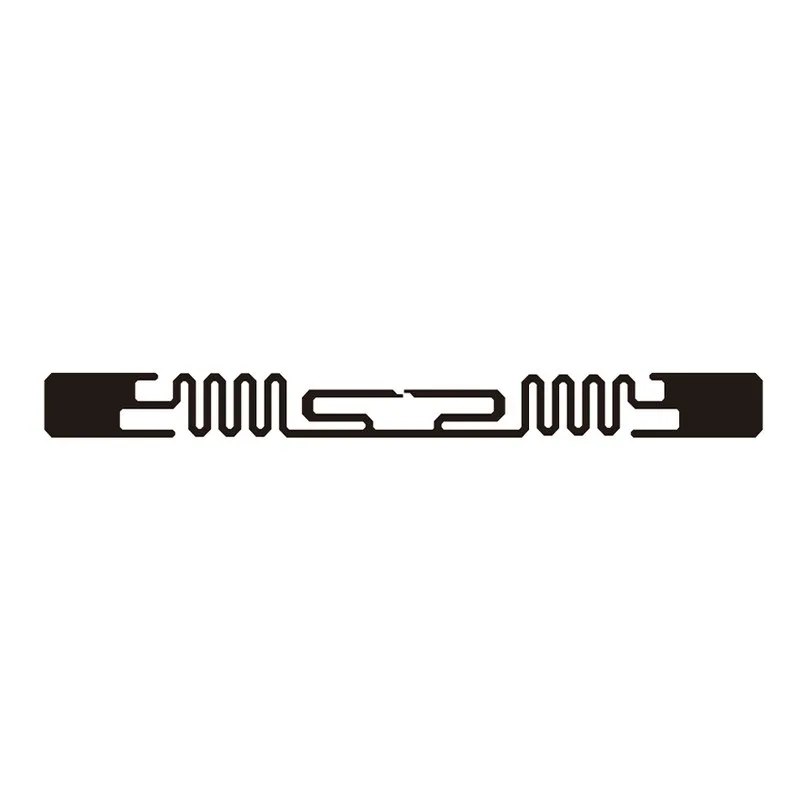
Five IT asset tags side by side
All five are passive EPC Gen2 (ISO/IEC 18000-63) tags; values come from each store listing. “India band” means India’s licence-exempt UHF RFID band, 865–868 MHz under G.S.R. 853(E) of 2021.
| Model | Construction and size | Chip (as listed) | Frequency (as listed) | Fixing and IP | Listed read range | Typical IT use |
|---|---|---|---|---|---|---|
| ID-9640 | Long, slim inlay; size not listed | Alien Higgs-EC (confirm on the batch datasheet) | 860–960 MHz, covers the India band | Not listed | Up to 6 m, depends on reader antenna and environment | Plastic-shelled laptops, docks (not an on-metal tag) |
| IDTS-MNTH3 | On-metal ABS/polyester, 38.5 × 14 × 3.5 mm, 2 g | Alien Higgs 3 (other chips on request) | India band; 902–928 MHz on request | Adhesive or cable tie; IP54 | Not listed | Servers, network gear, drives, tapes |
| CR400 | Ceramic, 10 × 5 × 3 mm | Alien Higgs-3 | India band / 902–928 MHz (US) | Adhesive backing; IP68 | Up to 2.0 m fixed reader / 1.0 m handheld, on metal | Trial on small flat metal faces |
| ID-C6009 | Micro ceramic, 5 × 5 × 3 mm, 0.4 g | Alien Higgs-3 | UHF (ETSI / FCC) | Epoxy bonding or embedded; IP68 | Up to 3.0 m (ETSI) / 3.3 m (FCC) on metal; reader not stated | Trial where free surface is minimal |
| ID-9503-M4 | Printable paper label rolls; size not listed | M4 | 860–960 MHz, covers the India band | Paper sticker; IP not listed | Up to 6 m, depending on reader, antenna and environment | Boxed stock; trial on plastic peripherals |
Ranges come from different listings and test conditions, so do not compare them across rows; confirm with a read test. Ask for the SKU’s material-compliance declaration in writing.
Laptops: the shell decides the tag
A passive UHF antenna is tuned for free air. Fixed flat to aluminium or steel, the metal reflects and short-circuits the antenna field and detunes the tag. Read range collapses, and more reader power does not reliably bring it back.
Plastic housings. The ID-9640 is a long, slim inlay on a thin, flexible substrate for flat or curved surfaces, listed for laptops, docks and other IT equipment, and not described as an on-metal tag, so keep it to plastic.
Aluminium or other metal shells. Use an on-metal tag, built so the metal becomes part of the tuned structure. The MNTH3 (38.5 × 14 × 3.5 mm, IP54) is the candidate here. Its listing names servers, drives and network gear rather than laptops, so pilot it on each laptop model and check that the 3.5 mm thickness suits the spot.
Lid or underside. No measured comparison shows either position reading better, so decide on criteria:
- the shell material at that exact spot (check lid and base separately)
- clear of vents, ports, rubber feet, OEM service labels and existing barcodes
- the printed asset ID stays visible
- wear from handling and bags
Pilot each position on a few machines before rolling out.
Servers, switches and storage: on-metal by default
Rack equipment is mostly metal. The MNTH3 is built for metal surfaces and fixes with adhesive or with a cable tie through its mounting hole. Memory is EPC 96 bits, extendable to 480 bits, plus 512 bits of user memory.
Fix it to the bezel, a rack ear or a handle; rack placement rules are on RFID solutions for the IT industry. Its IP54 rating suits indoor equipment rooms, not wet or outdoor positions, and its operating temperature of −40 °C to +85 °C should be checked against hot-aisle conditions. The listing gives no read range, so test on one populated rack first.
For why plain tags fail on metal, see RFID tags for metal surfaces and our guide to on-metal tags for asset and tool tracking.
Rails, small devices and tight metal faces: ceramic micro tags
Some metal parts have too little flat area for a 38.5 mm tag. Two ceramic tags are candidates to trial there on a flat, non-moving face; neither store listing is written for IT hardware.
CR400. Adhesive-backed black ceramic; confirm its listed on-metal range for your batch. Operating temperature is −40 °C to +100 °C; the +150 °C figure is a storage limit, not a read condition. The CR400 product page carries the full specification.
ID-C6009. It is not peel-and-stick: it is epoxy-bonded onto or embedded into the metal, so plan a permanent fixing. Its listing gives the frequency only as UHF (ETSI / FCC), with an on-metal range figure for each; ETSI’s RFID standard, EN 302 208, covers the same 865–868 MHz span as India, so the ETSI figure applies. Confirm in writing that the batch is tuned for India’s band. Operating temperature is −40 °C to +85 °C; its higher survival figure is not an operating temperature.
Peripherals, docks and boxed stock: printable labels
Monitors, docks, UPS units and printers in plastic housings can take a printed UHF label. The ID-9503-M4 is a printable sticker on the M4 chip, supplied as paper label rolls and described for adding RFID to existing barcode, price-ticket and shipping labels. Trial its adhesion and face-stock wear on your housings before rolling it out.
Print it on an RFID printer with the asset ID as human-readable text and a barcode. Keep it to plastic and card surfaces. On metal-cased peripherals a paper label detunes; use the MNTH3.
Running the audit with the CX1500N
- Encode and print. Ask for tags to arrive pre-encoded with your numbering scheme, or encode hard tags (MNTH3, ceramics) on a UHF desktop reader at the service desk and print labels on an RFID printer. Where the chip’s datasheet shows a factory-locked, serialised TID, record it against the asset number at encoding so audits can cross-check it.
- Fix the tag with the asset ID visible as text and barcode.
- Sweep rack by rack. The CX1500N handheld reader reads EPC Gen2 tags; walk at reduced power to isolate the rack in front of you. Its product page carries the full specification, and CX Flow Pro is Identium’s handheld utility.
- Reconcile. Match reads against the register in Identium’s RFID asset tracking software, or export them into your own asset register.
For continuous room-level location without a fixed reader at every doorway, battery-powered BLE beacons are the alternative to passive tags.
Passive tags need neither WPC approval nor BIS registration. Those approvals apply to the reader, and the CX1500N is BIS and WPC approved. Our BIS and WPC buyer’s guide explains where BIS does and does not apply.
Choosing and ordering
To specify a tag set, send us:
- the asset list by class and shell material
- the flat footprint in mm at each tag position
- the fixing, and whether kit is leased (adhesive) or kept for years (cable tie or epoxy)
- quantity, numbering scheme, and whether tags should arrive pre-encoded and printed
- the destination band: India, or 902–928 MHz for US sites
Tags are quoted against specification; custom tag orders typically turn around in 5–10 days. For the wider range, see RFID asset tracking tags, or contact us with the list above.