

We provide RFID tourism solutions that make travel safer and smoother for tourists across India. RFID for tourism covers everything a destination operator needs — ticketing, visitor management, access control and asset protection — on one identification platform. We also promote medical tourism, connecting travellers with specialists for expert opinions and surgeries at the best hospitals in India and around the world, and we recommend trusted nature-cure clinics and spa treatments. Contact us today for exclusive offers and deals.
Where RFID fits in tourism
- Ticketing and season tickets — RFID tickets, cards and wristbands replace paper at monuments, theme parks and resorts, including multi-visit season passes.
- Visitor management and access control — guests move through entry points hands-free while operators see live footfall by zone.
- Guard tour management — security patrols at heritage sites and resorts log each checkpoint automatically, with verifiable rounds.
- Personnel and asset management — staff attendance and the property’s asset register run on the same readers and tags.
- Information management and Wi-Fi hotspots — connected touchpoints deliver maps, schedules and service information to visitors on site.
- Cashless convenience — wristband-linked payments shorten queues at food courts, rides and retail counters inside the venue.
Technologies we deploy
- Barcodes
- Encrypted 2D codes
- RFID
- GPS
- Biometrics
- Holograms
Recommended Identium hardware
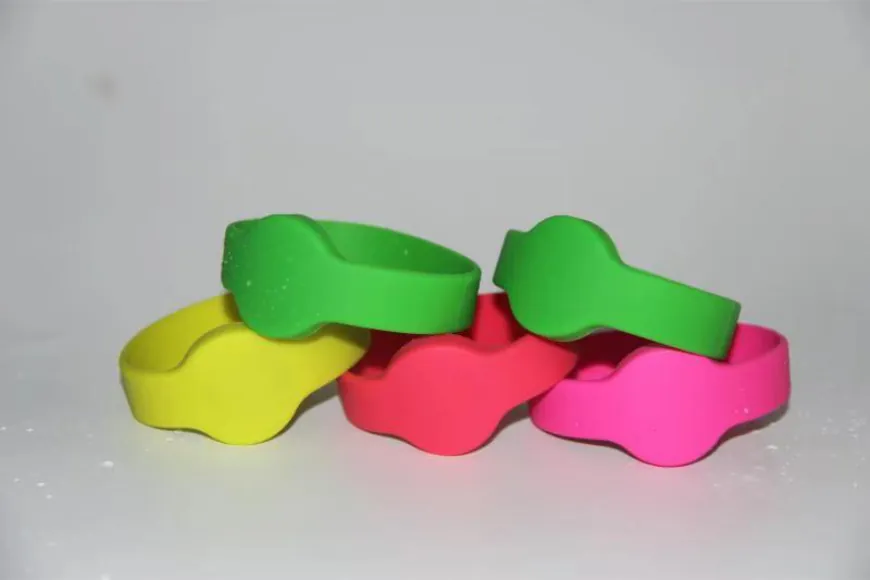
- C07 adjustable RFID wristband — a comfortable, reusable silicone band for parks, resorts and water attractions.
- RFID smart cards — printed season passes, guest cards and staff ID on one card stock.
- HLR200 UHF gate reader — walk-through reading at busy entry points.
- CX1500N handheld RFID reader — mobile ticket validation and asset checks anywhere on the property.
Related solutions
Travel like a local
Enjoy the company of a local friend who knows the city inside out — you are no longer a stranger in India. Our greeters and experts take you to places only a local knows; you would never find them going by the guide books.
Whether you operate an attraction, a resort or a destination programme, we can put identification, ticketing and safety on one platform — talk to our team.
Getting the frequency right before you order wristbands
A tourist attraction is rarely one RFID system. It is often two, on different frequencies, and the trouble starts when one credential is bought for every touchpoint at once.
The wallet belongs on HF 13.56 MHz (ISO 14443/15693 — Mifare, DESFire, NFC). HF reads at a few centimetres — our C07 silicone band is specified at roughly 0–5 cm with an LF or HF chip, against up to about 7 m on the UHF version, depending on reader, antenna and surroundings — and that short range is the point: at a food-court till you want a deliberate tap from one guest. A long-range reader at a busy counter sees every band within metres and cannot tell whose balance to debit. HF also gives key-protected memory areas on the card, which is what a stored-value scheme needs.
Entry can sensibly go either way, and that is the decision worth making before the order, not after. A turnstile tap on HF is cheap and unambiguous. A hands-free lane — a family walking through without breaking stride — wants UHF 865–868 MHz, the band delicensed for RFID in India by WPC (confirm the current BIS and equipment-approval requirements before you order). Passive UHF is EPC Gen2 (ISO/IEC 18000-63), marketed as RAIN RFID, and the same band covers the points where nobody should have to stop at all: coach and car parking with windshield tags, staff gates, guard-tour checkpoints, and the asset register of boats, cycles and AV kit audited with a handheld. Read range there is typically a few metres on a fixed gate reader, but it falls against a body, wet skin or a metal railing, so size lanes and antennas for the worst case rather than the datasheet figure.
| Touchpoint | Credential | Frequency | Typical read distance |
|---|---|---|---|
| Day ticket, peak-season footfall | Disposable Tyvek or PVC wristband | HF tap, or UHF where the lane must be hands-free | Centimetres on HF; metres on UHF |
| Season pass, member, staff ID | PVC or PETG card | HF (Mifare / DESFire) | A few centimetres |
| Cashless spend at food courts and rides | Reusable silicone wristband | HF / NFC | A few centimetres |
| Vehicle and coach entry | Windshield tag | UHF 865–868 MHz | Metres, environment-dependent |
| Guard-tour points, boats, hired kit | On-metal or hard tag | UHF 865–868 MHz | Metres, less on metal |
Where both jobs are genuinely wanted on one credential, dual-frequency constructions exist — either a single IC carrying an HF and a UHF interface over shared memory, or a separate HF label applied alongside a UHF tag. Neither is stock: dual-frequency parts are sourced and converted against a specific order, so treat that as a sample-lot conversation rather than an off-the-shelf swap.
For a seasonal site, chlorinated water, sunscreen and sand favour reusable silicone over disposable stock, and heritage fabric you cannot drill into takes adhesive, cable-tie or epoxy-mounted checkpoint tags rather than rivets. Custom tags typically run a 5–10 day turnaround, with printing, serial numbering and encoding done in-house and units tested before dispatch. Every reader we supply ships with an SDK, demo app and source code, which matters when a ticketing platform is already in place and has to be connected to rather than replaced.