

We provide turnkey RFID solutions for solar panels — tracking and identification of panels from the assembly line to the power grid using UHF RFID tags. Our solar panel RFID scope covers work-in-progress tracking on silicon PV and thin-film assembly lines, including integration of the RFID controller that writes sun-simulator data into the tag attached to each panel.
Manufacturing succeeds on the effective, efficient use of its resources. Monitoring work in progress at regular intervals, with speedy and reliable data collection, is what lets a facility run at optimum capacity and keep its processes visible at every level. We know the manufacturing process flow end to end, and we deploy RFID for event-driven data capture that directly supports production management.
Where RFID fits in solar panel manufacturing
- Work-in-progress tracking — each panel is identified at every stage of the silicon PV or thin-film line, so production status and history are visible in real time.
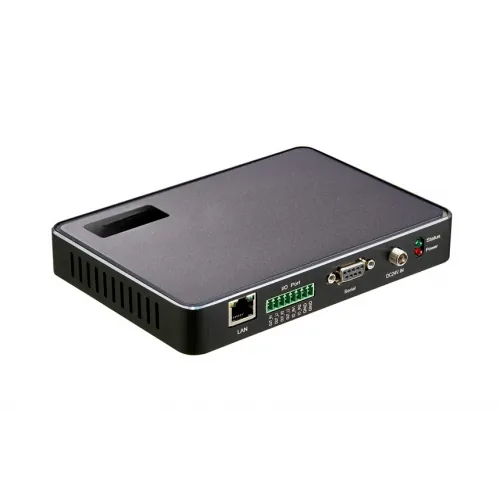
- Flash-test data on the panel itself — we integrate flash testers and sun simulators with RFID reader-writers, writing test data into the panel’s tag during manufacturing in line with MNRE guidelines.
- Lamination-proven tag selection — we have tested and benchmarked various tag types for performance through lamination, and for read variation across tag and reader orientations, so you start with a tag that is known to survive your process.
- Line automation at any scale — reader controllers are available in USB, industrial Ethernet, TCP/IP, Profibus, DeviceNet, RS232 and RS485 configurations, with hubs and gateways for multi-reader assembly-line deployments.
- Panels in the field — the same embedded identity supports tracking and identification of panels installed in power grids, for warranty, audit and O&M needs.
MNRE traceability and the solar opportunity
The market context makes traceability worth building in early. A World Bank report projected that by 2050, solar power generation plants could provide 11.3% of global electricity; India’s own programme had targeted about 22,000 MW of solar capacity by 2020, with solar taking a 9.6% share of generation. MNRE guidelines call for solar panel traceability, and our turnkey solutions implement it with RFID tags written at the point of manufacture.
Benefits delivered
- Effective cost control, as data is readily available at each phase of manufacturing.
- Better quality control, since processes become more visible with RFID.
- Clear opportunities to improve process efficiency.
- Elimination of human error through process automation.
Recommended Identium hardware
- UHF RFID inlays and labels — label formats proven on solar panels, encoded with serial and test data.
- IHZ4 4-port fixed reader — one reader covering multiple line stations through four antenna ports.
- CX1500N handheld RFID reader — verify installed panels at project sites and during O&M visits.
- RFID printers — print and encode serialised panel labels on demand.
Related solutions
- Manufacturing & WIP tracking
- RFID asset tracking
- Turnkey plant automation
- RFID supply chain management
If you are setting up or upgrading a module line, get the traceability layer right the first time — talk to our team for a turnkey proposal.
Where the tag sits on a module decides which tag you can buy
Frequency first. Passive UHF is the right technology here, and in India that means the 865–868 MHz band, which the WPC delicensed for RFID in its 2021 short-range-device rules — confirm the current WPC position before you freeze a specification, and check that any reader or antenna you buy is WPC-approved for India’s licence-exempt UHF RFID band. Identium’s UHF readers and antennas are. Modules are handled in stacks and on pallets, and once installed they sit in rows a technician walks past rather than touches, so you need identification at a distance and without line of sight, which is what passive UHF — EPC Gen2, formally ISO/IEC 18000-63, marketed as RAIN RFID — is built for. HF at 13.56 MHz or NFC only helps if you want a technician’s phone to read one module at centimetre range; it gives no stack counts and no gate reads, so treat it as an addition rather than an alternative. Note too that “EPC Gen2” and “RAIN RFID” describe passive UHF only — they never apply to the HF or NFC side of a dual-tag scheme, however a datasheet phrases it.
A module is also not a single surface — glass front, polymer backsheet or rear glass, aluminium frame, plastic junction box, and once installed a metal mounting structure directly behind the lot.
| Tag location | What it must survive | Format to specify |
|---|---|---|
| Inside the laminate, border margin | Lamination heat and vacuum, then sealed for life | UHF inlay qualified for your lamination cycle, placed clear of cells and ribbon |
| Backsheet or rear glass | UV, heat cycling, monsoon, years outdoors | UHF label, or a PC or ABS hard tag, with outdoor-rated adhesive |
| Aluminium frame | Detuning from the metal, dust, handling | On-metal (anti-metal) UHF tag, adhesive or riveted |
| Junction box | Plastic body close to cabling and metal | Small ABS or PCB UHF hard tag |
| Pallet or crate in transit | Bulk reads at a dock or gate | UHF pallet tag or label on the packaging |
| Inverter, combiner box, tracker drive | Painted steel outdoors, vibration | Rugged on-metal tag, epoxy potted |
Two things catch buyers out. A laminated-in tag is effectively permanent and very hard to swap, which is what warranty and traceability work usually needs — but it has to sit in the border margin clear of the cells and ribbon, and it has to come through your laminator’s full heat-and-vacuum cycle intact. Get the peak temperature and dwell time from your own process engineers, then qualify the exact tag on sample panels before you commit a line to it. And once a module is mounted, the frame and the support structure sit immediately behind the tag, so field reads behave differently from line reads. Validate a handheld against a mounted array, not against a warehouse stack.
Treat every range figure as environment-dependent. Passive UHF typically reaches on the order of 10–15 m with a fixed reader and a clear path; handhelds read less, and on-metal or small-footprint tags less again. Metal, water, mounting structure, antenna placement and orientation all move that number, so the only figure worth designing a gate or a walk-route around is one measured on your own site with your own tag.
Related reading
- How to scope an RFID project around read range and environment — what range you will actually get on site.
- On-metal RFID tags for asset and tool tracking — for frames, inverters and site tooling.
- Rugged RFID tags — formats built for outdoor and industrial duty.