

Identium delivers RFID projects for industrial plants on a turnkey basis — one accountable partner from the first site survey to a running, supported system. Turnkey RFID plant projects remove the integration risk of buying tags, readers and software from separate vendors and hoping they work together.
What a turnkey delivery includes
- Site survey and feasibility — we study your materials, processes and RF environment, and test candidate tags on your actual items before anything is ordered.
- Hardware selection and supply — the right mix of tags, fixed and integrated readers, antennas and printers for each read point.
- Software and integration — middleware and application software configured for your workflows and integrated with your ERP or MES.
- Installation and commissioning — mounting, cabling, tuning and acceptance testing at every gate, line and dock door.
- Training and support — operator and administrator training, documentation and ongoing AMC support.
We typically prove the system in a pilot area first, then scale line by line, so the plant keeps running while the rollout proceeds.
Where RFID fits in a turnkey plant
- Production lines — manufacturing & WIP tracking at every process stage
- Stores and finished goods — automatic reconciliation and dispatch verification at dock doors
- Plant assets — RFID asset tracking for machinery, instruments and IT equipment
- Tools and maintenance — tool-crib discipline and calibration-due flags
- Gates and yards — vehicle and material movement logged at every entry and exit
- People — employee attendance and access on the same reader infrastructure
Recommended Identium hardware
- IHZ4 4-port fixed reader — the workhorse for line-side and conveyor read points.
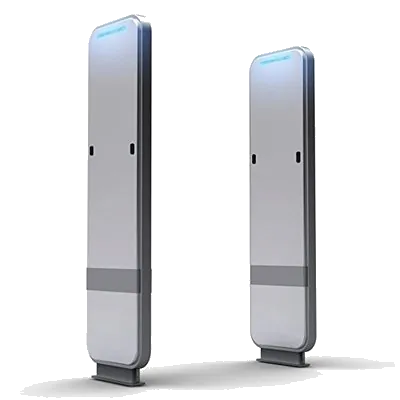
- UHF gate reader HLR200 — portal coverage for dock doors and plant gates.
- CX1500N handheld RFID reader — audits, searches and commissioning checks.
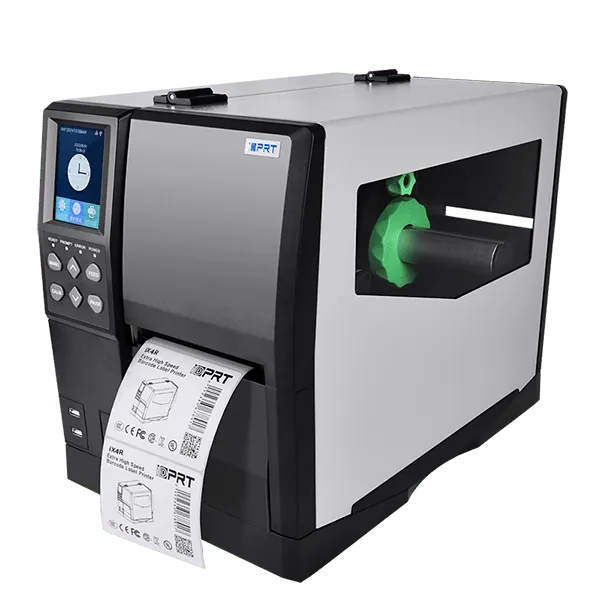
- RFID printers — industrial print-and-encode for labels at the point of use.
- RFID antennas — matched antennas tuned per read point during commissioning.
Related solutions
Talk to our team to scope a turnkey RFID project for your facility — survey first, commitment after the pilot proves itself.
Frequency, read points and site prerequisites
Almost everything a plant tracks — pallets, bins, WIP carriers, tools, cartons and vehicles at the gate — has to be read in bulk, at a distance, without line of sight. That is passive UHF territory: in India the 865-868 MHz band, which WPC has delicensed for RFID — the position as of 2026, and worth confirming against current WPC and BIS requirements before hardware is specified — running EPC Gen2 (ISO/IEC 18000-63), the standard marketed as RAIN RFID. Identium’s UHF readers and antennas are WPC-approved for India’s licence-exempt UHF RFID band. The usual exception inside a plant is staff identity — employee cards, canteen and locker applications often stay on HF 13.56 MHz (ISO 14443, Mifare or DESFire), a different technology that is not RAIN RFID. A turnkey design can carry both frequencies rather than force every use case onto one.
Read points are where a plant project succeeds or fails, each with its own logic:
| Read point | Typical hardware | What decides the design |
|---|---|---|
| Line-side or conveyor stage | 4-port fixed reader, linear-polarised antenna | Fixed tag orientation favours linear; RF power trimmed so the next station is not read |
| Dock door or plant gate portal | Gate reader, circular-polarised antennas both sides | Pallet height and load width; stray reads from the adjacent door |
| Tool crib, stores counter | Desktop or integrated reader | A confined, repeatable read zone matters more than range |
| Yard and vehicle entry | Fixed reader, windshield tags | Lane width, and how the barrier controller is triggered from the read event |
| Audits and exceptions | Android handheld | Battery life across a shift and the search workflow, not raw range |
Range at each of these points is environment-dependent rather than a fixed figure: tag type, the surface it sits on, surrounding metal and liquids, forklift traffic and neighbouring antennas all move it. The number worth putting in a specification is the one measured at that position on your site, not one taken from a datasheet.
Tag choice follows the surface, not the application name. Metal carriers, jigs and machine parts need on-metal tags with a spacer and ground plane; plastic totes and cartons take ordinary labels or hard tags; heat, solvents and wash-downs call for ultrasonically welded or epoxy-potted construction; cable-tie tags suit items you cannot drill or glue. Custom artwork, encoding and serial numbering are typically a 5-10 day turnaround from our Delhi factory.
Three things belong in the BOQ before installation, because retrofitting them is costly: a network drop or PoE at every read point, short coax runs (coax loses signal before it ever reaches the antenna, and that loss shows up as reduced range), and a read-accuracy target per read point, agreed in writing before commissioning.