

We provide RFID solutions for places of worship to manage pilgrims, archives and assets, deploying technology for better visibility of every process. The objective is to integrate all pilgrim and visitor services into a single system — with provision for biometrics (fingerprint, iris and facial recognition) for devout individual identification, barcoding and RFID for easy data capture, and smart cards for payment transactions.
We build the transaction platform that makes this seamless and improves the pilgrim experience: cloud-based solutions, information delivery to pilgrims’ mobile devices, and mobile applications for availing established services. Trusts can also avail our digitisation services for multilingual text from printed matter, along with services to print religious material.
Where RFID fits in places of worship
- Pilgrim and visitor management — RFID wristbands and smart cards identify devotees through darshan queues, special-entry lines and accommodation, while data analytics on visitor flows helps administrators plan for peak days.
- Access control — biometric identification combined with RFID restricts sanctum, treasury and administrative areas to authorised individuals only.
- Temple jewellery management — ornaments and valuables are tagged and reconciled piece by piece, so periodic verification no longer depends on manual registers.
- Archive management — manuscripts, records and religious texts are tagged, tracked and complemented by our multilingual digitisation services.
- Asset management and security — movable property across shrines, kitchens, guest houses and stores is audited in a fraction of the usual time.
- Information centre automation — user-requested content is delivered straight to pilgrims’ mobile devices, reducing crowding at enquiry counters.

Recommended Identium hardware
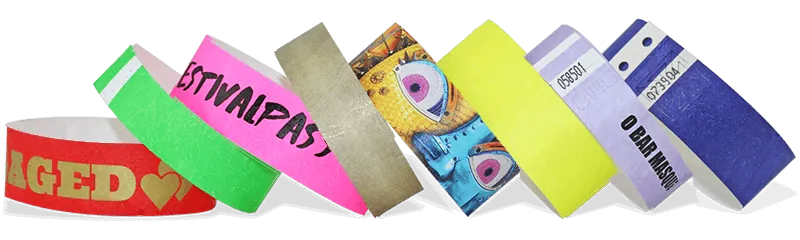
- C07 adjustable RFID wristband — a comfortable, reusable silicone band for pilgrim identification; disposable Tyvek options suit single-visit issue.
- RFID smart cards — payment and identification cards for donations, prasadam counters and staff.
- HLR200 UHF gate reader — high-throughput, hands-free reading at entry and exit points on heavy-footfall days.
- CX1500N handheld RFID reader — fast audits of temple jewellery, archives and assets without moving a single item.
Related solutions
- RFID jewellery management solutions
- RFID file tracking for deeds, records and archives.
- RFID security systems
- RFID access control with biometrics
Every place of worship has its own traditions, layout and trust requirements — our deployments respect all three. To plan a pilgrim management or asset protection system for your institution, talk to our team.
Matching the frequency and tag to each temple process
A large shrine can end up running several RFID systems side by side, and they do not all want the same frequency. Anything that has to be read hands-free while a crowd keeps walking — darshan queue lanes, special-entry gates, asset and archive audits — belongs on passive UHF at 865–868 MHz, the band delicensed for RFID in India under WPC rules as of 2026; confirm the current WPC notification before you specify. Passive UHF is also the only place the EPC Gen2 air interface (ISO/IEC 18000-63, marketed as RAIN RFID) applies — those terms do not describe HF or LF products. Anything a devotee or a counter clerk presents deliberately — a donation, a prasadam or annadanam purchase, a locker — sits better on HF 13.56 MHz, where MIFARE or DESFire cards carry protected on-card memory and the typical read distance of a few centimetres makes stray reads at a busy counter unlikely. Where one credential has to do both jobs, a dual-frequency card carrying both an HF and a UHF chip is an option.
| Process | Frequency | Typical tag | Why this one |
|---|---|---|---|
| Darshan queues and entry gates | Passive UHF 865–868 MHz | Silicone or Tyvek wristband with a UHF chip | Reads on the move; nobody has to stop and tap |
| Donation, prasadam and annadanam counters | HF 13.56 MHz | PVC or PETG card | Protected on-card memory; a deliberate tap, not a stray read |
| Lockers, cloakrooms and footwear stands | HF 13.56 MHz or LF 125 kHz | Wristband, card or fob | Short read distance keeps one read to one locker |
| Ornaments and vessels | Passive UHF | Jewellery hang-tag or dumbbell tag on a thread; on-metal tag where it has to sit against the metal | Gold, silver and brass detune a plain label |
| Manuscripts, registers and deeds | Passive UHF | Paper or PET label, or a tag in a pouch for fragile material | A shelf can be audited in a pass instead of item by item |
Three site conditions decide how well any of this performs in practice. First, the human body absorbs UHF, so a wristband on a raised wrist tends to read more reliably than a card carried in a pocket; the range you actually get at a gate depends heavily on how the token is carried, so plan on a site trial rather than a catalogue figure. Second, metal arrives with the crowd — brass vessels, steel plates and hand-carried offerings all pass through the read zone — which argues for antennas at chokepoints such as barricaded lanes and doorways rather than across an open hall. Third, many shrines wash their floors through the day and footfall is barefoot, so anything issued there is better sealed than merely laminated: we can ultrasonically weld or epoxy-pot units built for wet and harsh service, and reader electronics are best mounted clear of the wash-down zone with only the antenna down at floor level.
On festival days the constraint is often the issue counter rather than the reader. Pre-encoded stock, a desktop reader at each issue point for encoding and verification, and printed artwork with serial numbering already done before the batch ships do more for throughput than extra read range. Custom tag work typically runs a 5–10 day turnaround and units are tested in-house before dispatch, so festival stock is worth committing well ahead of the calendar date.