

We provide complete RFID solutions for slaughter houses, working with expert companies in mechanised slaughterhouse implementations. RFID gives slaughter houses the one capability regulators, exporters and retail buyers all demand: traceability of every animal and every cut, from intake to cold storage to dispatch. We partner with world-leading industrial data-capture automation companies to deliver turnkey solutions — discuss your project with us today for a detailed proposal.
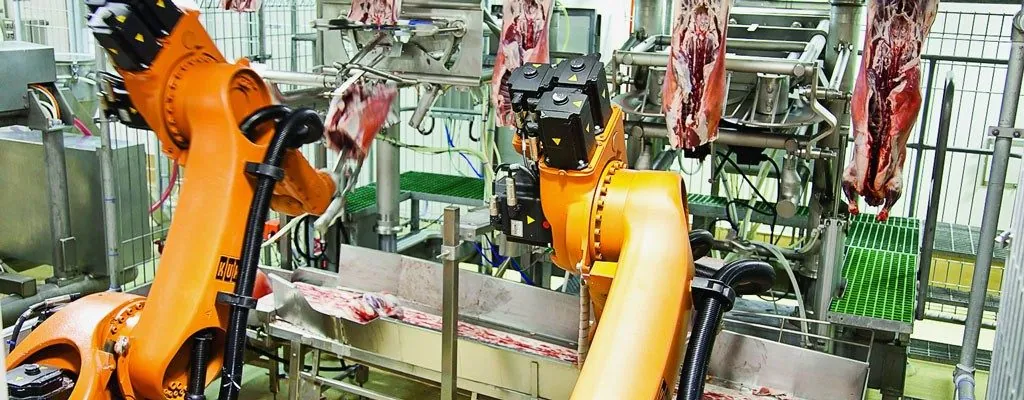
Where RFID fits in slaughter houses
- Animal identification at intake — ear-tagged animals are identified individually at lairage, linking each carcass back to its source and records.
- Carcass and cut traceability — mechanised slaughter houses require animal body parts to be identified individually; barcode and RFID tagging keeps that identity intact through every processing level.
- Inspection management — parts held in refrigerated storage rooms are periodically inspected for quality by veterinarians, with each inspection logged against the tagged item.
- Cold storage management — chamber-level stock visibility shows exactly what is in which room, at what age, without opening doors for manual counts.
- Line and workflow automation — state-of-the-art workflow automation captures information in real time and delivers it to the right person at the right time, removing bottlenecks and enforcing organisation-wide best practices.
- Slaughter house to supermarket — the data-flow infrastructure we create with RFID lets processors understand and optimise production while giving buyers a verifiable “trace your meat” story for safe meat.
Recommended Identium hardware
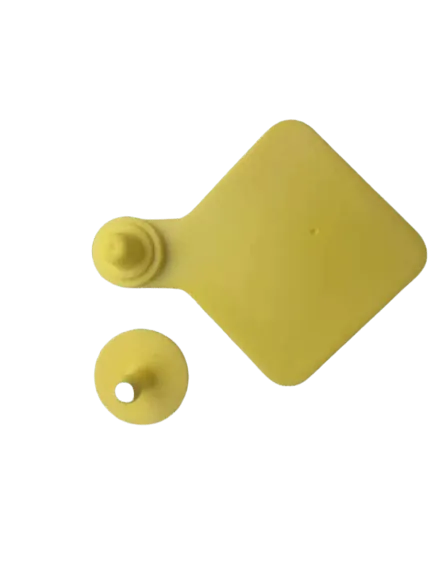
- RFID animal tags — UHF ear tags for individual identification at intake.
- IHZ4 4-port fixed reader — portal coverage on processing lines and chiller doorways via multiple antennas.
- CX1500N handheld RFID reader — cold-store stocktakes and dispatch verification in minutes.
- Rugged RFID tags — for crates, hooks and returnable containers in wet, low-temperature areas.
Related solutions
- RFID livestock tracking for the farms supplying your facility.
- RFID supply chain management
- RFID warehouse management for finished-goods cold storage and dispatch.
From a single inspection point to a fully mechanised line, we can scope the right level of automation for your plant. Talk to our team for a detailed proposal.
Choosing frequency and tags for a wet, metal-heavy plant
In a meat plant, physics decides whether an RFID deployment works — the software is rarely the hard part. For carcass, container and carton tracking the practical default is passive UHF on the 865–868 MHz band that India delicenses for RFID under the 2021 WPC short-range-device rules (confirm the current WPC and BIS position for your equipment; this reflects the position as of 2026), running EPC Gen2 — ISO/IEC 18000-63, marketed as RAIN RFID. Passive UHF can typically read many tags in one pass at a rail or chiller doorway, and one tag population serves both the fixed line reader and a handheld walk-through of the cold store.
Two things work against UHF here, and both are designable. Meat and blood are largely water, which absorbs UHF energy, so the tag belongs on the hook, trolley, crate or carton rather than pressed against the product. Stainless rails and panels detune ordinary tags and reflect signal, so anything mounted on steel needs an on-metal tag and a deliberately tight read zone. Reading the next carcass on the rail is a worse fault than reading nothing.
| Point in the plant | What you tag | Frequency and tag type | Why |
|---|---|---|---|
| Lairage and intake | Live animal | UHF ear tag; LF 125/134 kHz where the farm already uses it | UHF can be read at the race without restraining the animal; LF works only at close proximity |
| Dressing line and rail | Hook, trolley, gambrel | UHF on-metal hard tag | The steel carrier holds identity; the meat cannot |
| Offal bins, returnables | Container | Rugged sealed UHF tag, or cable-tie tag | Survives daily washdown |
| Boxed cuts into chiller | Carton or pallet | UHF label or pallet tag | Bulk read at the doorway |
| Staff and vet zone access | Person | HF 13.56 MHz card or wristband | Close range only, no stray reads |
Washdown is the other constraint. Lines are cleaned hot, often with caustic or chlorinated foam, so an adhesive label specified for a dry warehouse is the wrong choice here. For plant fixtures we build sealed tags — ultrasonically welded or epoxy potted — fixed by rivet, cable tie or epoxy rather than adhesive, and laser-marked with the same ID that is encoded, so a readable number survives when the tag is soiled. Tags moving between chiller and dressing hall also pick up condensation and ice, which shortens usable range while they are wet. Typical read distances depend on the tag, the mounting surface and the surrounding metal, so set reader power and antenna position from a trial in your own plant rather than from a bench figure. Custom form factors have a typical turnaround of 5–10 days from our New Delhi factory, and our UHF readers and antennas are WPC-approved for India’s licence-exempt UHF band (position as of 2026).