

RFID public distribution systems bring process automation to PDS operations — from beneficiary identification through to authenticated transactions using UID and NPR data. At the scale the PDS operates, automatic identification is the only practical way to confirm that the right foodgrains reached the right beneficiary, and that stock moved where the records say it did.
India’s PDS at a glance
The PDS evolved as a major instrument of the Government’s economic policy — ensuring the availability of foodgrains to the public at affordable prices and strengthening food security for the poor. It serves as a safety net for a population of more than 330 million who are nutritionally at risk, and with a network of about 4.99 lakh Fair Price Shops (FPS), it is perhaps the largest distribution network of its kind in the world.
The system runs on the joint responsibility of the Central and State Governments. The Centre handles procurement, storage, transportation and bulk allocation of foodgrains; the States distribute them to consumers through the FPS network, with operational responsibility for allocation within the State, identification of below-poverty-line families, issue of ration cards, and supervision and monitoring of FPS functioning.
Where RFID fits in public distribution systems
- Beneficiary identification at the FPS — RFID-enabled ration cards are authenticated against UID and NPR data before any issue, closing the door on ghost cards.
- Transaction automation — a desktop reader at the FPS counter records each authenticated issue electronically, replacing manual registers.
- Godown stock visibility — tagging stock at pallet and crate level gives depots a live picture of what is held where, and for how long.
- Vehicle movement control — windshield-tagged trucks are logged automatically at depot gates, creating a verifiable record of dispatches between godowns and Fair Price Shops.
- Rapid audits — handheld readers let inspectors count an FPS or a godown section in minutes, on unannounced visits.
- Leakage and diversion control — gate reads at every node build an audit trail that makes diversion visible instead of deniable.
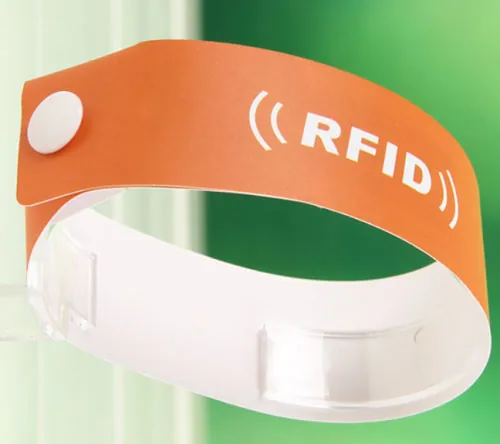

Recommended Identium hardware
- RFID smart cards — durable printed card formats suited to ration-card programmes.
- UHF Desktop Reader 103 — counter-top beneficiary authentication and card issue at the FPS.
- RFID pallet tags — pallet-level identification of foodgrain stock in godowns.
- CX1500N handheld RFID reader — fast depot and FPS stock audits for inspection teams.
- HLR200 UHF gate reader — automated logging of tagged vehicles and stock at depot gates.
Related solutions
- RFID warehouse management
- RFID supply chain management
- RFID vehicle tracking systems
- RFID pallet tracking solution
If your department or agency is evaluating PDS automation — from smart ration cards to godown gate logging — talk to our team for a solution architecture grounded in Indian field conditions.
Choosing the right frequency for a PDS deployment
A PDS rollout is two identification problems wearing one badge, and they do not share a frequency. Settling that split before the BoQ is written saves rework on site.
The beneficiary layer — the card presented at the counter — usually sits at HF 13.56 MHz (ISO 14443, MIFARE Classic or DESFire). A read range of a few centimetres is a feature here, not a limitation: the card the dealer taps is the card that gets read, not the three waiting in the queue behind it. DESFire adds secure on-card memory, which helps at an FPS where connectivity is intermittent and transactions may have to be held and forwarded. HF is not EPC Gen2 or RAIN RFID — those terms describe passive UHF only. Where a State has already standardised its ration card on UHF, the same discipline applies in reverse: keep the counter reader’s transmit power low so the read zone stays on the counter instead of reaching into the queue.
The logistics layer — stock, pallets, trucks, godown gates — is passive UHF at 865–868 MHz, India’s delicensed band under WPC rules as of 2026, using EPC Gen2 (ISO/IEC 18000-63). Neither HF nor LF will read a loaded pallet or a moving vehicle without someone presenting each item by hand.
| Layer | Tagged item | Frequency | Read distance (typical, environment-dependent) |
|---|---|---|---|
| Beneficiary | Ration card | HF 13.56 MHz, ISO 14443 | A few centimetres, by design |
| Beneficiary, where the card spec is UHF | Ration card | UHF, EPC Gen2 | Deliberately short — hold the counter reader at low power |
| Stock | Pallets, crates, bin stacks | UHF, EPC Gen2 | Up to roughly 10–15 m on a fixed reader in clear air; much less around metal |
| Vehicle | Windshield tag | UHF, EPC Gen2 | A few metres across a gate lane, depending on antenna siting and vehicle speed |
Two field constraints shape the UHF side. Foodgrain is dense and often damp: jute bags of wheat or rice absorb UHF energy, so a tag buried inside a stack tends to read unreliably or not at all. Tag the pallet, crate or stack rather than the individual bag, and site antennas so the tag faces outward at the dock or gate. Godowns are also metal-rich — racking, roller shutters and steel-framed pallets can detune a standard label — so specify an on-metal construction in those positions and plan for the shorter range that comes with it.
Identium is BIS certified, and our UHF readers and antennas are WPC-approved for India’s licence-exempt UHF RFID band (current as of 2026; confirm the applicable BIS and WPC requirements for your own specification). Every reader ships with an SDK, demo app and source code, so the read layer can be wired into an existing ePoS or State supply-chain application rather than replacing it.