
An RFID temperature sensor tag links a temperature reading to an identity, so the value arrives with the ID of the carton or consignment it belongs to. This page compares three temperature-sensing tags that Identium lists on the India RFID Store, each read a different way: two RFID tags (a battery-free UHF label and an NFC-based RFID temperature logger) and one BLE ear tag for cattle and sheep. For identity versus thermal history in a cold chain, see our cold-chain temperature monitoring guide. For tags built to survive heat rather than measure it, see high-temperature RFID tags.

Specification comparison
Values are from the store listings.
| ID-SE-AS3213T | ID-SE-FM13DT160 | ID-BLE-E59 | |
|---|---|---|---|
| Technology | Passive UHF RFID | NFC (HF) | Bluetooth Low Energy |
| Chip | AS3213T | Fudan FM13DT160 | — |
| Frequency | 860–960 MHz (covers India’s 865–868 MHz band) | 13.56 MHz (NFC) | 2.4 GHz (2400–2483.5 MHz) |
| Protocol | EPC Class 1 Gen2 (ISO/IEC 18000-63, formerly 18000-6C) | Not listed* | BLE; iBeacon and Eddystone formats |
| Memory | EPC 192 bits | 160 kbit | — |
| Power | Passive (battery-free) | Not listed* | Wide-temperature CR2032 button cell |
| Size and format | 94 × 20 mm label, flexible thin substrate | 77 × 44 mm label | Ear tag, standard applicator, listed as IP68 (waterproof) |
| Range as listed | Up to 6 m ID read, depending on reader, antenna and environment | Not listed* | 70 m in open line of sight |
| Sensing | Temperature, reported when read | Temperature sensing and data logging | Ear-surface temperature; optional step counting |
| Read by | UHF reader with software that supports the sensor chip | NFC reader; app and phone support not stated | ID-BGW-02 gateway or Bluetooth smartphone |
| What it is for | Spot checks at read points | A consignment’s temperature history | Herd monitoring |
*Not on the store listing; take it from the datasheet.
ID-SE-AS3213T: battery-free UHF label for spot checks
The ID-SE-AS3213T is a 94 × 20 mm passive UHF label on the AS3213T chip. When a UHF reader interrogates it, it returns a temperature reading with its ID, so goods can be checked without opening the packaging. Its listed 860–960 MHz is the chip’s global tuning span, which takes in India’s licence-exempt 865–868 MHz UHF RFID band under G.S.R. 853(E) of 10 December 2021, and its air interface is EPC Class 1 Gen2 (ISO/IEC 18000-63, formerly 18000-6C). The listed range of up to 6 m is an ID read and depends on the reader, antenna and environment. No temperature-read range, measuring range, accuracy or resolution is given, so test temperature reads at your intended distance.
With no battery, the label is powered only while a reader interrogates it, so it reports a spot value at that moment and cannot sample between read points: you learn the temperature at the dock door or cold-room checkpoint, not during the journey.
Reading it needs a UHF reader plus software that supports the sensor chip. The reader software must know how the AS3213T reports its temperature value, so confirm in writing which software does this. Check compatibility with your intended reader, including any of Identium’s UHF RFID readers, before ordering in volume. A phone cannot read this label, because phone NFC is HF and never reads UHF. For plain identity tags on crates and pallets alongside it, see Identium’s UHF RFID tags.
ID-SE-FM13DT160: NFC logger for a shipment’s history
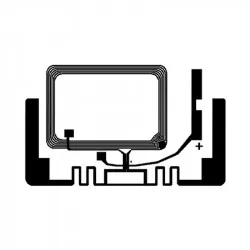
The ID-SE-FM13DT160 is a 77 × 44 mm label on the Fudan FM13DT160 chip with 160 kbit of memory, listed for temperature sensing and data logging. It records temperature data with the tag’s identity, so the read-out on arrival gives a shipment’s history, not one value at one checkpoint.
Before specifying it for a lane, confirm on the datasheet:
- the power source;
- the logging interval and number of readings stored;
- how logging starts and stops;
- the temperature range and accuracy;
- the air-interface standard and read range;
- which reader, phone app and operating system read out the log.
Identium’s NFC and HF RFID tags cover plain identity on the same band.
ID-BLE-E59: BLE temperature ear tag for cattle and sheep
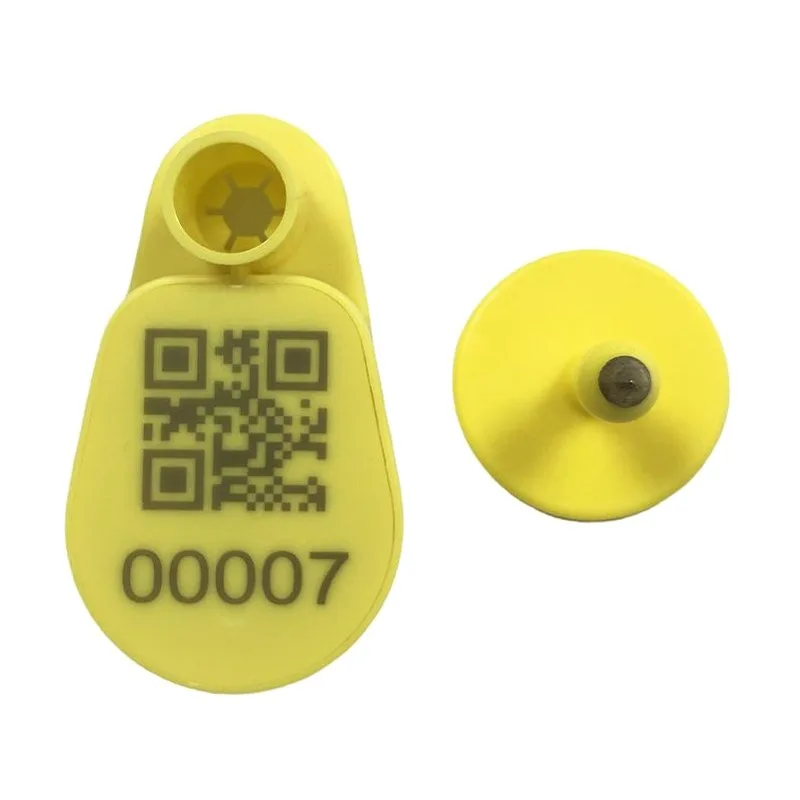
The ID-BLE-E59 measures ear-surface temperature, with optional acceleration-based step counting. Ear-surface temperature is not core body temperature, and no accuracy figure or health-detection claim is given.
It runs on a wide-temperature CR2032 button cell. Battery life is about 2.35 years under the stated profile (acceleration 60 s + temperature 60 s + broadcast 10 s, at 25 °C), so ask for an estimate at your own settings. It is listed as IP68 (waterproof), fits with a standard ear-tag applicator, carries a laser serial number and QR code, and is configured with the Identium Connect app.
Readings reach an ID-BGW-02 gateway up to 70 m away in open line of sight (as listed); the tag can also be read by a Bluetooth smartphone, at a range the listing does not state. The E59 does not support AoA positioning. The BLE beacons and gateways page covers gateways and the wider BLE range.
The E59 is not an ISO 11784/11785 or Pashu Aadhaar identity tag, so it sits alongside the animal’s identity tag rather than replacing it. For electronic identity, see Identium’s RFID animal ear tags; RFID livestock tracking covers read points around the farm.
Spot reading or logged history: matching the tag to the job
- Vaccine or pharma consignments where the whole journey matters: a logger such as the ID-SE-FM13DT160, once its datasheet confirms a battery-powered build. A spot read at dispatch and receipt says nothing about the hours in between, and only a powered logger samples during them.
- Warehouse zones, dock doors and cold-room checkpoints: the ID-SE-AS3213T, which returns a temperature value when a UHF reader with sensor support interrogates it at a read point such as those set up for RFID warehouse management.
- Herd monitoring on pasture or in sheds: the ID-BLE-E59 with ID-BGW-02 gateways, alongside identity ear tags.
- Lab samples that need identity only in freezers: no sensor tag. The low-temperature labels on our sample management page identify samples but do not measure temperature.
What to confirm before you specify
- Reader support. Get written confirmation of which reader and software retrieve and convert the AS3213T’s temperature value.
- Range and accuracy. No listing states a measuring range or accuracy, so take both from the datasheet.
- Logger power and interval. Confirm the FM13DT160’s power source, logging interval and read-out method.
- Material compliance. Ask for each SKU’s material-compliance declaration in writing.
- Radio approval. Passive labels have no transmitter and need no WPC approval or BIS registration.
- A trial. Test on your own packaging, crates or animals, at your read points and temperatures.
Choosing and ordering
All three are listed on the India RFID Store: the ID-SE-AS3213T UHF temperature sensor label, the ID-SE-FM13DT160 NFC temperature logger and the ID-BLE-E59 BLE temperature ear tag. Pricing is quoted against specification: send the quantity, your intended reader or gateway, and the journey to cover. For the buying side of cold-chain monitoring, see the store’s cold-chain buyer’s guide. To scope a project, contact us.