
The IDTS-AMC134 is an FDX-B pet microchip supplied in India by Identium: a 134.2 kHz glass implant using the ISO 11784/11785 protocol, about the size of a grain of rice, pre-loaded in a sterile, single-use syringe. It is meant for identifying pets, livestock, laboratory animals and fish, and it carries a 15-digit number that an FDX-B reader reads.
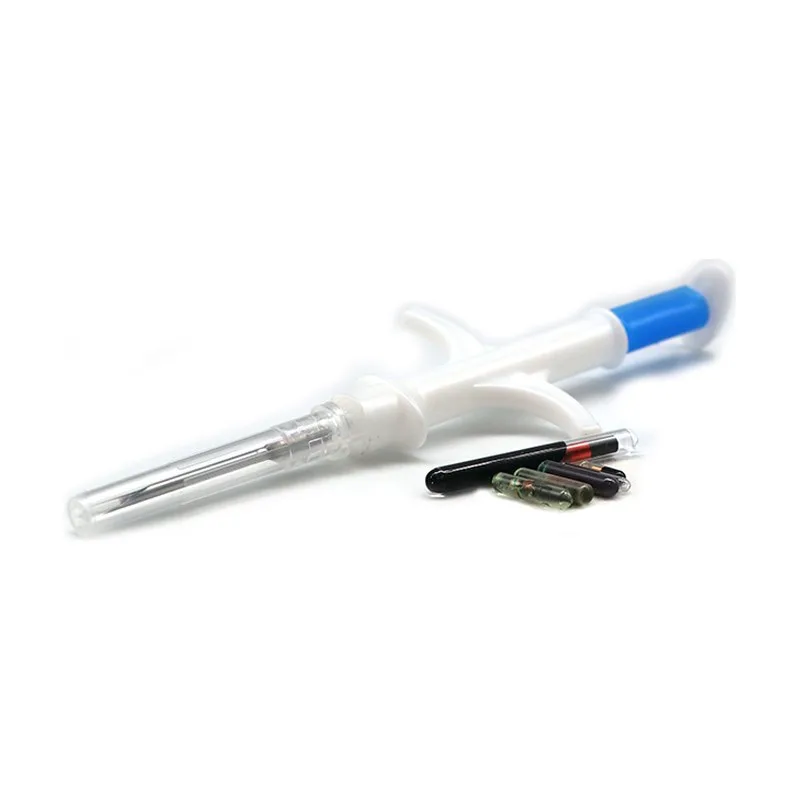
Specifications
- Frequency: 134.2 kHz (LF)
- Protocol: ISO 11784/11785, FDX-B
- Chip: EM4305
- ID number: 15-digit code, printed as a barcode on the pack
- Sizes: 2.12 × 12 mm, 1.4 × 8 mm and 1.25 × 7 mm
- Capsule: bioglass, with an anti-migration surface coating
- Rated durability: over 15 years (a rated figure, not a guaranteed life in the animal)
- Syringe: single-use, butterfly-type design; the needle is fixed to the syringe and cannot be removed; white barrel
- Weight: 8.5 g for the syringe with chip
- Sterilisation: ethylene oxide (EO), valid for 5 years
- Packaging: each unit is packed individually in medical breathable paper; the pack shows the sterilisation date, the expiry date and the 15-digit code as a barcode
Ask for the read distance with your scanner, the needle gauge and the size suited to your species; the listing does not state them.
Reading the 15-digit number
An ISO 11784 ID is all-numeric. According to guidance agreed by ISO/TC23/SC19/WG3 and published by ICAR, it is a three-digit prefix followed by a 12-digit animal number, with the prefix stored in 10 bits and the number in 38. The prefix is one of two things:
- a country code (up to 899, following ISO 3166), used in official schemes, or
- a manufacturer code (900–998), allocated by ICAR and used mostly for companion animals and voluntary management. ICAR has granted shared codes since 2004; under ICAR’s Section 10 guidelines the shared code is 900, and 901–998 are unshared.
The 12-digit number must be unique within its prefix. The Section 10 guidelines add that a country code may replace a manufacturer code only where a competent national authority keeps the numbers unique for that species.
So ask which prefix your batch carries before you design the register. ICAR’s Section 10 guidelines state that ISO 24631-1 conformance testing is obligatory before a device is used in official animal identification, so if your scheme is official, get its device requirement in writing first. Our guide to ICAR certification versus ISO 11784/11785 explains how to check any supplier’s register entry.
Which reader reads it
Any FDX-B reader to ISO 11784/11785 reads the IDTS-AMC134, such as the RA91 handheld listed on the store. The RA91 works at 134.2 kHz and 125 kHz and lists FDX-B and EMID tag types. Its store listing gives over 15 cm for a glass tube tag and over 25 cm for a 30 mm ear tag, varying by tag. The listing gives no figure for each IDTS-AMC134 size, and neither figure is an in-animal distance, so test the 7 mm and 8 mm sizes with your reader before you commit. It also has a 1D/2D barcode imager and connects by cable, 2.4G wireless or Bluetooth to Windows, Linux or Android hosts; the full specification is on the store listing.
LF has no anti-collision in practice, so the reader identifies one animal at a time.
Three things will not read this chip:
- A phone. Phone NFC works at HF 13.56 MHz and cannot read LF or UHF tags.
- A UHF handheld. UHF readers in India work on the 865–868 MHz band and do not read an LF implant.
- The HF and HF/LF readers. The IDTS-DLH20’s 125 kHz side reads proximity cards, not 134.2 kHz FDX-B, and the HF models do not read FDX-B either.
One point to settle first: the RA91 does not list HDX. Our pet management solution page recommends a dual-type FDX-B/HDX scanner for clinics and shelters, so ask if you need HDX.
The syringe and the pack
The syringe is single-use, and its needle is fixed, so there is no separate needle to fit or swap. Before use, check the sterilisation date and the expiry date printed on the pack. EO sterilisation is valid for 5 years. The 15-digit barcode on the pack is the chip’s number, and it is the number to record against the animal. The RA91’s imager reads common 1D and 2D codes, but the pack barcode’s symbology is not stated, so confirm it before you plan to scan packs rather than key the number in.
Have a veterinarian or a trained implanter your programme authorises place the chip. For the scan-before and scan-after routine, see the RFID pet management page.
What the microchip is not
- Not a locator. It has no battery, no transmitter and no GPS. It gives the animal an identity, not a location.
- Not ICAR-certified. Identium holds no ICAR certification. The 15-digit number identifies an owner only once your programme records it in its own register, such as a clinic database or a municipal licence file.
- Not the only animal tag format. For how implants compare with ear tags and rumen boluses, see animal identification RFID tags.
Municipal pet licensing
Checked 22 October 2026. Whether a city makes a microchip a condition of a pet licence is set by the corporation’s own notification and licence conditions, and these change. Ask your corporation for both in writing before you order, and quote the requirement in your enquiry. The store’s guide to stray cattle and dog RFID tagging for municipal corporations covers programme planning.
Choosing and ordering
Both products are quoted against specification.
| Model | Form factor / size | Chip | Frequency (India note) | For |
|---|---|---|---|---|
| IDTS-AMC134 | Glass implant in a single-use syringe; 2.12 × 12, 1.4 × 8 or 1.25 × 7 mm | EM4305 | 134.2 kHz LF, FDX-B | Identifying pets, livestock, laboratory animals and fish |
| RA91 | Handheld reader; 267 × 148 × 38 mm, about 500 g | Not stated | 134.2 kHz and 125 kHz LF; FDX-B and EMID. Has Bluetooth and 2.4G radios | Reading FDX-B and EMID animal tags for pet, livestock and fish ID; also 1D/2D barcodes |
Send the species, chip size, quantity, whether you need readers and whether the scheme is official. The store listings carry the full specifications: the IDTS-AMC134 animal microchip with syringe and the RA91 animal tag reader. For livestock ear tags, see our RFID animal and cattle ear tags. Our guide to RFID cattle ear tags and Pashu Aadhaar covers herd numbering. To send a specification, contact our team.